
 English
 French
 Spanish
 Russian
 Arabic
 Italy
Italy
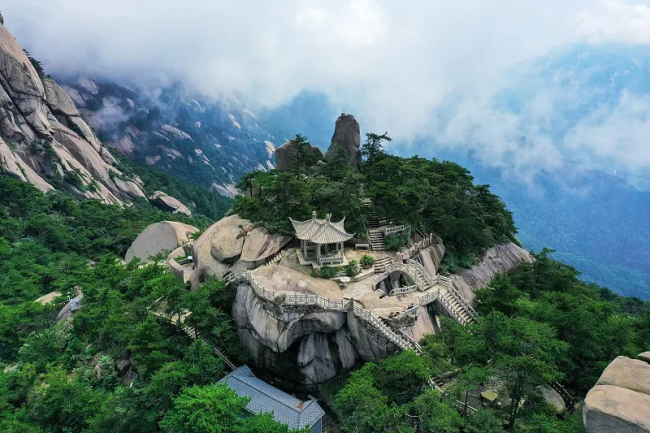
Anqing
Anhui Province, China · Anqing
“Famous City on the Wan River · Home of Huangmei Opera”
Contents
I. City Overview
II. Geography & Ecology
III. History
IV. Top Attractions
V. Cultural Heritage
VI. Ethnic Culture & Folk Customs
VII. Local Cuisine
VIII. Crafts & Specialties
IX. Getting There
X. Best Season & Itineraries
XI. Economy
I. City Overview
Anqing lies in southwestern Anhui on the Yangtze's north bank, at the junction of Anhui, Hubei, and Jiangxi—an important port and historical-cultural city of the middle Yangtze. It governs Yingjiang, Daguan, and Yixiu districts, the five counties of Huaining, Taihu, Susong, Wangjiang, and Yuexi, and the county-level cities of Tongcheng and Qianshan. Covering about 13,590 km² with some 4.1 million people, Anqing is hailed as a 'land of culture and opera,' the birthplace of Huangmei opera and home of the Tongcheng School. The dramatic Tianzhu Mountain, the riverside Zhenfeng Pagoda, and Chen Duxiu's origin in the New Culture Movement make it a bright pearl of the Wan River basin.
Quick Facts
Location | SW Anhui, Yangtze north bank (Anhui–Hubei–Jiangxi) |
Divisions | 3 districts, 5 counties, 2 cities |
Area | ~13,590 km² |
Population | ~4.1 million |
Ethnic groups | Han |
Highest peak | Tianzhu 1,488 m |
Climate | Humid subtropical |
II. Geography & Ecology
Anqing leans on the Dabie Mountains' spur to the north and faces the Yangtze to the south, with the Wanhe, Qianshui, and Changhe rivers crossing it. Tianzhu is the highest peak of southwest Anhui—sheer cliffs and grotesque rocks; alluvial and hilly land interlace into a 'rivers-lakes amid hills' pattern. Wide wetlands and islets—Wuchang and Caizi lakes—shelter migratory birds and rich farms, earning the ancient name 'gateway of the Wan River.'
III. History
Anqing's city history spans over a millennium; the Southern Song set Anqing Prefecture, and from early Qing to early Republic it long served as Anhui's capital—one of the Yangtze's three great towns. Its literary flame burned bright: the Qing Tongcheng School—Fang Bao, Liu Dakui, Yao Nai—preached unity of 'moral principle, scholarship, and rhetoric,' shaping two centuries of letters; modern Chen Duxiu founded New Youth, opening the New Culture Movement; Huangmei opera rose from rustic tea-picking tunes to national fame. The old walls and Yingjiang Temple witness the Wan River's vicissitudes and glory.
IV. Top Attractions
Mount Tianzhu
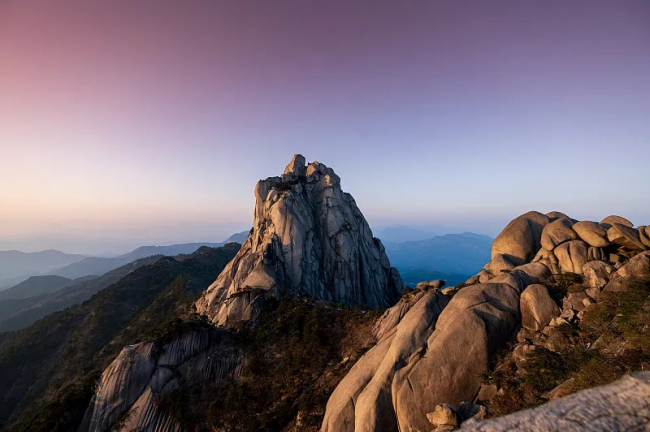
Mount Tianzhu
In Qianshan, Tianzhu was titled 'Southern Sacred Mountain' by Emperor Wu of Han; its 1,488 m summit rises like a pillar holding the sky—precipitous yet beautiful. Granite peaks, deep gorges, and sea of clouds coexist, earning 'first mountain of Jianghuai'; the Third Patriarch Temple is a Zen ancestral seat, and cliff inscriptions line the valley springs. A UNESCO Global Geopark since 2011, it suits climbing, Zen retreat, and geology study.
Huangmei Opera
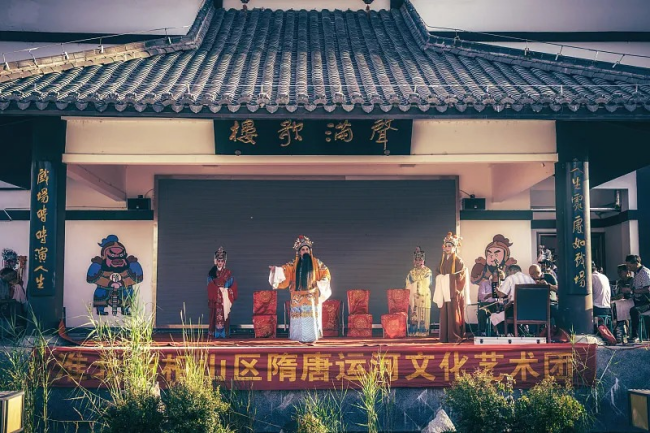
Huangmei Opera
Born from tea-picking tunes around Anqing, Huangmei opera is one of China's five great opera forms, beloved through 'The Heavenly Match' and 'The Female Prince Consort.' Its bright, lilting tunes brim with daily life; artists like Yan Fengying brought it nationwide. Anqing's Huangmei Opera Art Center and Zaifen Theatre stage year-round shows—the best place to feel the 'home of opera.'
Daopashi Historical District
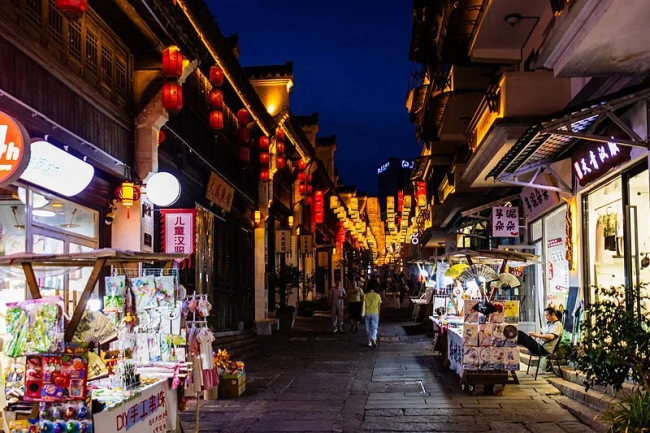
Daopashi Historical District
Daopashi Street in old Anqing is an intact Ming–Qing quarter named for a Ming 'crouching lion' stone arch. Blue brick, dark tiles, and deep flagstones line shops of time-honored brands, creative boutiques, and Huizhou food; at night lanterns hang and opera lingers—strolling here touches Anqing's memory as the old provincial capital and trading town.
Linghu Park
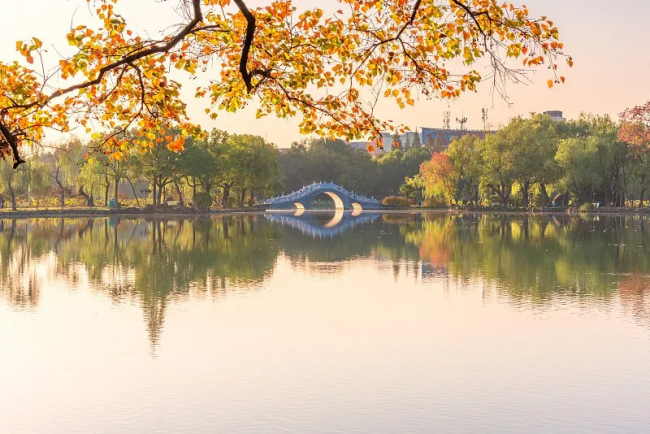
Linghu Park
Linghu in northern Anqing, named for its abundant water caltrops, is a green gem in the city. Rippling water and weeping willows host a Huangmei opera hall, a Deng Shiru stele museum, and a zoo amid flowers all year. Boating and listening to Huangmei tunes make it a leisurely 'little West Lake of the Wan River.'
Chen Duxiu Residence & Duxiu Garden

Chen Duxiu Residence & Duxiu Garden
Chen Duxiu, a native of Huaining (Anqing), championed the New Culture Movement and co-founded the Communist Party of China. Duxiu Garden and his former residence (in Anqing and Huaining) recall his life through steles, artifacts, and gardens; the 'Sudden Thunder' reliefs and exhibits trace his stormy years from New Youth to the Party's founding—a base for red-culture and modern intellectual history.
Huating Lake
Huating Lake
Huating Lake in Taihu County is a large reservoir in southwest Anhui, embraced by green hills with misty vast waters—'the Qiandao Lake of the Dabie Mountains.' Islands dot the water and the ecology is pristine for boating, fishing, and organic-fish feasts; the Xifeng Zen Temple by the shore, amid ancient trees, offers tranquil retreat—a waterside escape for cooling off and wellness.
V. Cultural Heritage
Anqing's heritage runs deep. The Tongcheng School was the Qing dynasty's most influential prose stream, its 'pure, elegant' style shaping later letters; Huangmei opera, born here, became national intangible heritage in 2006; Chen Duxiu ties to the New Culture Movement and the Party's founding; the Zhenfeng Pagoda, Yingjiang Temple, and gate tower mark the ancient city. 'Tongcheng essays and Huangmei tunes' form Anqing's unique cultural identity.
VI. Ethnic Culture & Folk Customs
Anqing is mainly Han, with gentle folkways that honor learning and art. Huangmei tunes echo at festivals; temple fairs, lantern shows, and dragon-boat races bustle; Tongcheng's 'Six-Foot Alley' tale preaches courtesy. Riverside fish feasts, mountain folk songs, and local performances weave a warm, vivid life along the Wan River.
VII. Local Cuisine
Dish | Description |
Anqing Jiangmao Dumplings | A time-honored brand—thin skin, tender filling, savory broth—named for founder Jiang Mao, a nostalgic Anqing breakfast. |
Huaining Tribute Cake | A Huaining pastry—white, soft, sweet but not cloying, once a court tribute, symbolizing 'rising step by step.' |
Tianzhu Rock Fungus | Rock fungus grown on Tianzhu cliffs, simmered with chicken—delicate, nourishing, a top mountain delicacy. |
Tongcheng Water Bowl | A Tongcheng specialty of clear-broth-poached meatballs, kidney, and fish slices—delicate and refined, like Tongcheng prose. |
Wan River Fish Feast | A full-fish banquet of Yangtze fresh catch—steamed, braised, fermented—showing the 'land of fish and rice' abundance. |
VIII. Crafts & Specialties
Anqing's crafts blend literary grace and skill. As China's 'capital of letters,' Tongcheng has long traditions of woodblock printing and fine mounting; Wangjiang cross-stitch (national heritage) is famed for 'patterns on both sides'; Yuexi Cuilan and Tianhua Gujian teas are fragrant; Qianshan bamboo mats are cool and durable summer ware.
IX. Getting There
Transport: Anqing Tianzhushan Airport links several Chinese cities; the Hefei–Anqing–Jiujiang high-speed and Nanjing–Anqing intercity lines connect it, about 1–2 hours from Hefei, Nanjing, and Wuhan; the Yangtze Anqing Port is a key inland harbor. Buses and shuttles reach Tianzhu, the opera center, and Linghu; mountain sites are best by car.
X. Best Season & Itineraries
Best time to visit: Spring (Mar–May): azaleas on Tianzhu, willows at Linghu; summer (Jun–Aug): cool hills and Huating water fun; autumn (Sep–Nov): crisp air for summit and Zen; winter (Dec–Feb): Wan River snowscapes and festive opera towns.
Recommended itineraries:
· Sacred Mountain One-Day: Tianzhu (Third Patriarch Temple–Tianzhu Peak) — Qian River drift.
· Opera Culture 2-Day: Huangmei Art Center — Daopashi Street — Chen Duxiu Residence — Linghu.
· Landscape Anqing 3-Day: Tianzhu — Huating Lake — Tongcheng Confucian Temple & Six-Foot Alley — Wuchang Lake birding.
XI. Economy
Anqing is the regional center of southwest Anhui with a solid industrial base—petrochemicals, new-energy vehicles, and high-end equipment are rising fast. In agriculture it is a key base for grain, cotton, oil, and aquaculture; Huaining blueberries and Yuexi water bamboo are famed. Riding the Yangtze golden waterway and high-speed rail, Anqing builds a modern riverside city; tourism leverages Tianzhu, Huangmei, and Tongcheng culture for steady all-region growth.