Introduction to Jiamusi City and Its Famous Scenic Spots
City Introduction
Located in the hinterland of the Sanjiang Plain in northeastern Heilongjiang Province, Jiamusi stands at the confluence of the Songhua River, Heilongjiang River and Ussuri River. As the easternmost central city in China, it enjoys the reputations of “Eastern Pole of China” and “First City of the East”. It is an important birthplace of ancient northeastern Chinese civilization with a profound historical heritage. Thousands of years ago, the ancient Sushen people lived and thrived here, creating an original fishing and hunting civilization. Later ethnic groups including the Yilou, Mohe and Jurchen inhabited this land for generations, carrying forward the millennial cultural heritage of the northern frontier. Through the Liao, Jin, Ming and Qing dynasties, Jiamusi remained a vital integration hub for nomadic, fishing-hunting and farming civilizations on the northeastern border, witnessing the inheritance of ethnic minority cultures and the development history of the frontier territories. In the mid and late Qing Dynasty, numerous settlers from the Central Plains migrated northeastward to reclaim wasteland and settle down. The in-depth integration of Central Plains farming culture and northern frontier ethnic culture shaped the city’s simple, resilient, inclusive and open folk temperament.
In modern times, benefiting from its superior geographical location at the confluence of three major rivers, Jiamusi developed into an important transportation hub, commercial town and core grain base in eastern Heilongjiang. As the core hinterland of the renowned Beidahuang (Great Northern Wilderness), it once witnessed a vigorous large-scale development campaign. Countless educated youths and builders rooted themselves in the northern frontier to reclaim wasteland and construct the city, fostering the distinguished Beidahuang spirit of hard work, selfless dedication and pioneering innovation, which has become the most iconic spiritual symbol of Jiamusi. Furthermore, Jiamusi is a crucial red revolutionary base in Northeast China, where soldiers of the Northeast Anti-Japanese Allied Forces fought bloody battles during the war, leaving profound red frontier heritage. Endowed with vast wetlands, fertile black soil and magnificent boundary river scenery, Jiamusi features the grand natural charm of northern China, integrating expansive plains, ecological wetlands and border rivers. Today, blending millennial ancient frontier civilization, Beidahuang reclamation heritage, red anti-Japanese spirit and diverse border ecological scenery, Jiamusi is a vibrant and charming city with profound historical accumulation at the Eastern Pole of China.
Famous Scenic Spots in Jiamusi
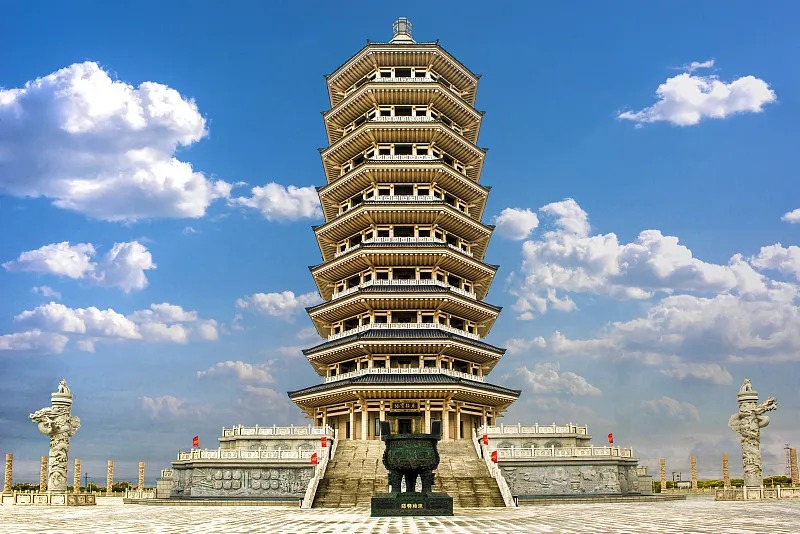
1. Eastern Pole Scenic Area (Eastern Pole Square)
Situated in Fuyuan City of Jiamusi, at the easternmost tip of China’s territory and the confluence angle of the Heilongjiang River and Ussuri River, the Eastern Pole Scenic Area is a landmark resort that greets the first sunrise in China. Known as the “First Outpost of the East and the Eastern Pole of China”, it carries unique territorial culture and profound patriotism for the northern border. As the eastern geographical coordinate of China’s territory, this land is the first to welcome the morning sunlight every day, endowing the scenic area with unparalleled geographical significance and spiritual symbolism. It serves as a sacred cultural landmark for people to admire the sunrise and pay tribute to the motherland’s territory.
The core Eastern Pole Square features a grand and solemn layout. The iconic Eastern Pole Sculpture, designed based on the Chinese character “Dong (East)”, stands tall and distinctive, becoming the supreme cultural symbol of China’s Eastern Pole. Adjacent to the vast boundary river waters where two rivers converge, the square offers a panoramic view of the magnificent Sino-Russian boundary river scenery, fully displaying the grand and pure landscape of the northern border. Perfectly integrating territorial culture, boundary river culture and border customs, the scenic area is equipped with viewing platforms, waterfront walkways and cultural landscapes, systematically presenting the geographical features, development and construction history of China’s eastern border. For thousands of years, this easternmost land has guarded the eastern gateway of the motherland and witnessed the stability and evolution of the frontier. A unique geographical landmark and stunning ecological resort, the Eastern Pole Scenic Area is also an important humanistic spiritual symbol that embodies national feelings and the bearing of China’s territory.
2. Heixiazi Island Tourist Area
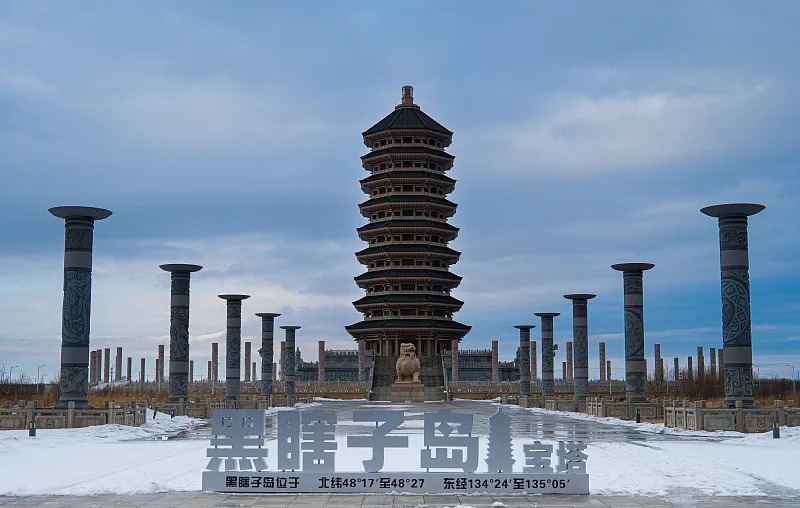
Located at the confluence of Sino-Russian boundary rivers in Fuyuan City of Jiamusi, Heixiazi Island is a core ecological island on the Sino-Russian border and a historically significant border scenic spot. It bears the profound negotiation history and territorial return history of the Sino-Russian border, serving as an important witness to China’s territorial integrity and peaceful foreign diplomacy. Surrounded by waters with a unique geographical location at the core of the river convergence, the island has been a vital water pass on the northeastern frontier since ancient times, witnessing century-old Sino-Russian border trade, cultural integration and territorial changes.
After the delimitation of the Sino-Russian border, part of Heixiazi Island returned to China, setting a model for peaceful coexistence, friendly consultation and win-win cooperation between the two countries and endowing the scenic area with profound historical and political value. The island retains original and pure ecological scenery, with vast wetlands, lush vegetation and flocks of water birds, preserving a complete northern frontier wetland ecosystem and serving as a habitat for rare waterfowls and wild animals. With well-preserved primitive landscapes, interleaving river beaches, wetlands, meadows and water systems, the island presents picturesque scenery all year round and the pure and vast charm of the northern boundary river. Integrating border history, territorial heritage, boundary river ecology and cross-border customs, Heixiazi Island Tourist Area combines profound historical memories and original natural beauty, making it a core symbolic scenic spot of Jiamusi with historical significance, ecological value and distinctive border style.
3. Sanjiang Plain Wetland Nature Reserve
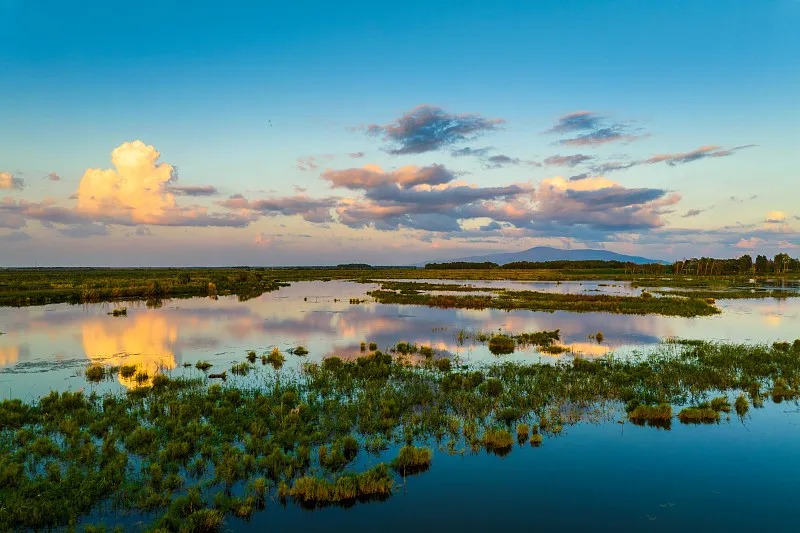
Distributed across Jiamusi’s administrative territory, the Sanjiang Wetland is the largest and best-preserved primitive marsh wetland in Asia. Formed by the alluvial plains of the Songhua, Heilongjiang and Ussuri Rivers, it serves as a core ecological barrier in Northeast Asia and is reputed as the “Kidney of Beidahuang”, recording the tens of millions of years of ecological evolution of the northern frontier. After long-term hydrological deposition and geomorphological changes over hundreds of millions of years, the vast wetland has formed a unique and complete ecological system, ranking as the most precious wetland ecological treasure house and gene bank in northern China.
Boasting expansive terrain, dense water networks, continuous marshes and boundless meadows, the wetland features pristine ecological environments and nurtures hundreds of rare protected wild animals and birds including red-crowned cranes, oriental white storks and white-tailed sea eagles, serving as a world-class migration passage and habitat for migratory birds. In spring and summer, the wetland is covered with lush aquatic plants and rippling blue water with flying gulls, presenting vibrant scenery; in autumn and winter, it is wrapped in snow, showing the vast and desolate artistic conception of northern China. As the core carrier of Beidahuang ecology, the Sanjiang Wetland not only regulates the climate and conserves water sources of the northern frontier, but also witnesses the transformation of Beidahuang from a desolate wilderness to an ecological oasis. Perfectly integrating primitive wetland ecology, hydrological scenery of the three-river basin and wild northern frontier charm, it is an ideal natural resort to appreciate Jiamusi’s original northern scenery and explore the ecological heritage of the Sanjiang Plain.
4. Beidahuang Memorial Hall
Located in downtown Jiamusi, Beidahuang Memorial Hall is a national-level thematic memorial hall uniquely dedicated to systematically displaying the development and construction history of Beidahuang. It carries the most profound reclamation and struggle history since the founding of the People’s Republic of China and acts as the core cultural carrier and red landmark for promoting the Beidahuang spirit. A century ago, Beidahuang was a vast, desolate and uninhabited wilderness. After the founding of New China, a large number of demobilized soldiers, educated youths and construction workers responded to the national call, dedicating themselves to reclaiming wasteland and defending the frontier, launching the vigorous construction of Beidahuang.
Through abundant precious historical materials, physical cultural relics, video records and scene restoration, the memorial hall fully displays the tremendous transformation of Beidahuang from an ancient wilderness to China’s major grain granary, vividly reproducing the arduous struggles of generations of pioneers who endured severe cold and harsh conditions to cultivate land and build the frontier. It systematically sorts out reclamation culture, educated youth culture and agricultural reclamation culture, profoundly interpreting the Beidahuang spirit of hard work, pioneering courage, overall awareness and selfless dedication. As an important national patriotic education and red research base, Beidahuang Memorial Hall not only records the reclamation development history of Jiamusi and even the whole Heilongjiang region, but also preserves the youthful memories and national responsibility of a generation, serving as a core humanistic palace for inheriting the frontier pioneering heritage and carrying forward the spirit of struggle.
5. Sifeng Mountain Scenic Area
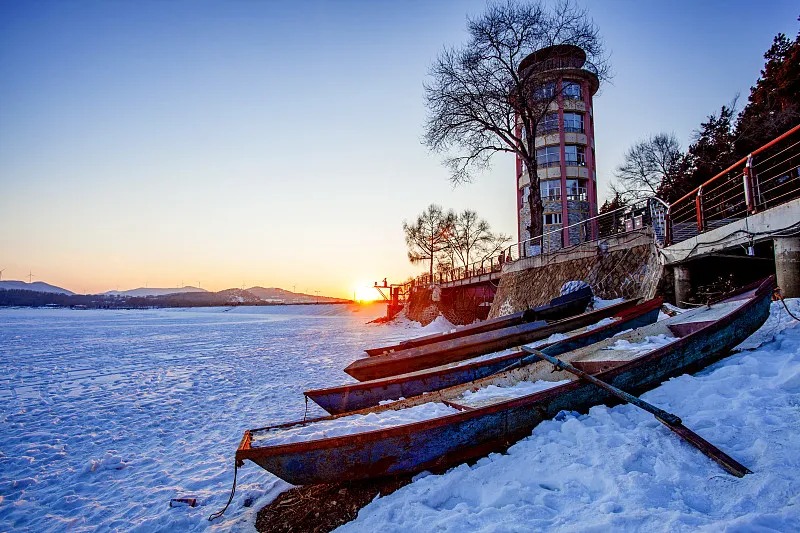
Situated in the southern suburb of Jiamusi, Sifeng Mountain Scenic Area is the city’s core landscape ecological resort integrating mountains, lakes, ancient relics and ecological leisure functions, and the most representative natural and humanistic scenic spot in Jiamusi’s suburbs. Built based on the rolling Sifeng Mountain and artificial lake water system, the scenic area features lush forests, picturesque mountains and lakes and serene environments, free from urban noise. It combines the grandeur of northern mountains and the gentleness of lake scenery, forming a rare landscape paradise in the northern frontier city.
The scenic area boasts a long-standing humanistic heritage, with numerous ancient ruins, century-old temples and anti-Japanese relics scattered on the mountains, witnessing the humanistic changes and frontier vicissitudes of Jiamusi from ancient times to the present. For thousands of years, it has been a preferred place for local people to go sightseeing, pray and relax, accumulating simple and profound northern landscape culture. With flourishing vegetation and distinct four-season scenery, it presents blooming flowers in spring, cool shades in summer, dyed forests in autumn and vast snow scenery in winter. The clear lake and winding waterfront trails form an elegant urban landscape painting of interdependent mountains and waters. Perfectly integrating original mountain forest ecology, profound frontier humanity and urban leisure charm, Sifeng Mountain Scenic Area is a core landscape business card and mainstream tourist leisure landmark of Jiamusi.

 English
 French
 Spanish
 Russian
 Arabic
 Italy
Italy