
 English
 French
 Spanish
 Russian
 Arabic
 Italy
Italy
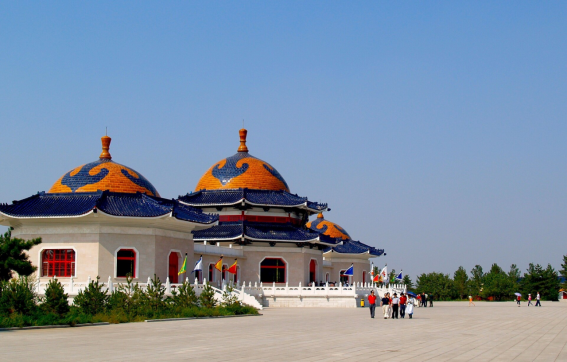
Ordos
Inner Mongolia, China · Ordos
“Holy Land of the Sky-Sent Hero · New City in the Desert”
Contents
I. City Overview
II. Geography & Ecology
III. History
IV. Top Attractions
V. Cultural Heritage
VI. Ethnic Culture & Folk Customs
VII. Local Cuisine
VIII. Crafts & Specialties
IX. Getting There
X. Best Season & Itineraries
XI. Economy
I. City Overview
Ordos lies in southwestern Inner Mongolia, embraced by the great '几'-shaped bend of the Yellow River, covering about 87,000 km² with a population of roughly 2.2 million. It is both the resting place of Genghis Khan, the 'Son of Heaven,' and a major national energy and chemical base with abundant coal and natural gas; its per-capita GDP has long ranked among the highest in China. Here grassland, desert, the Yellow River, and a new city meet: the Genghis Khan Mausoleum is solemn and majestic, Xiangshawan's sandy sea stretches to the horizon, the Kubuqi Desert is a miracle of green advancing over sand, and the Kangbashi New District shows the modern transformation and ambition of a resource-based city.
Quick Facts
Location | Southwestern Inner Mongolia, in the Yellow River's great bend |
Divisions | 2 districts, 7 banners |
Area | ~86,752 km² |
Population | ~2.2 million |
Ethnic groups | Han, Mongol, Hui, Manchu |
Avg. elevation | ~1,000–1,500 m |
Climate | Temperate continental, dry with little rain |
II. Geography & Ecology
The Ordos Plateau is part of the Ordos Block, sloping from higher in the northwest to lower in the southeast, with terrain of plateau, desert, hills, and Yellow River alluvial plains. The Kubuqi Desert stretches across the north and the Mu Us sandy land extends to the southeast edge, a main battlefield of sand control in northern China. The Yellow River forms its famous great bend here, nourishing riverside oases. The climate is typical temperate continental—plenty of sunshine, large day-night temperature difference, annual mean temperature around 6–8°C, a magical place where 'frontier Jiangnan' and 'lone smoke in the desert' coexist.
III. History
Ordos has a long history. Its name derives from 'ordo' (palace tent), and it is also called 'Hetao' for its Yellow River bend location. It was a meeting ground of northern nomadic and Central Plains farming civilizations; the Xiongnu, Xianbei, Turkic, Tangut, and Mongols successively roamed here. In 1227 Genghis Khan fell ill and died during the Western Xia campaign; on the journey north, his catafalque paused in Ordos, and his spirit-tent 'Eight White Yurts' was long enshrined here, forming today's Genghis Khan Mausoleum. In the Ming and Qing dynasties the Ordos tribe was an important part of the Mongol right wing; in modern times it has rapidly risen through energy development to become a 'pearl beyond the Great Wall' in China's modernization.
IV. Top Attractions
Genghis Khan Mausoleum
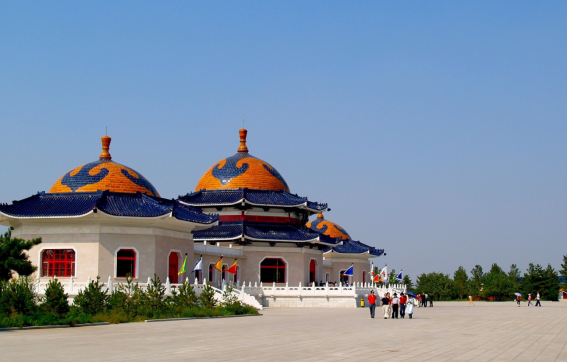
Genghis Khan Mausoleum
The Genghis Khan Mausoleum lies on the Gandeli grassland in Ejin Horo Banner, Ordos, a sacred site for worshipping Genghis Khan, the 'Son of Heaven.' The complex consists of three connected Mongol-yurt-style halls roofed with blue glazed tiles and gilded finials, solemn and majestic. The 'Four Great Sacrifices' are held on the 21st of the third lunar month, the 15th of the fifth, the 12th of the ninth, and the third day of the tenth. The Darkhad guardians have kept the mausoleum for over 780 years. The scenic area displays Mongol history, culture, and sacrificial rites, offering an important window into the rise and fall of the grassland empire.
Xiangshawan (Resonant Sand Bay)
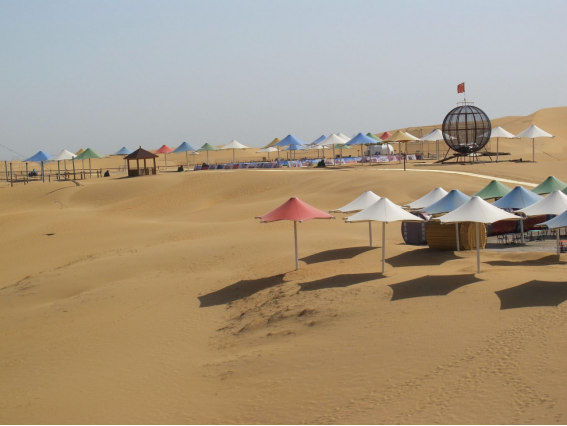
Xiangshawan (Resonant Sand Bay)
Xiangshawan lies in Dalad Banner at the eastern end of the Kubuqi Desert, China's first desert resort and a national 5A tourist attraction. The dunes here emit a humming sound, giving the place its name 'Resonant Sand Bay.' The scenic area combines sightseeing, leisure, sports, and vacation: camel treks across the sand sea, desert surfing cars, sand sliding, off-road driving, and stays in unique desert hotels such as the Lotus Hotel. At night, the vast desert starry sky is breathtaking and romantic.
Kubuqi Desert
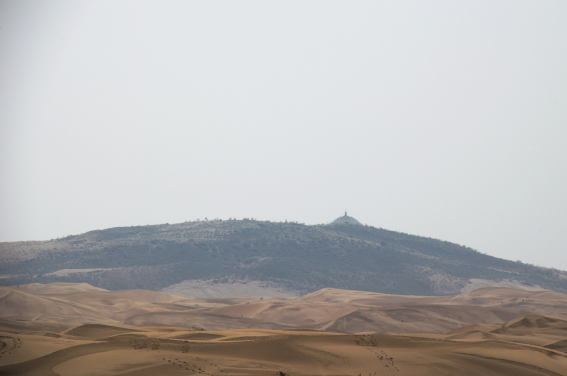
Kubuqi Desert
The Kubuqi Desert is China's seventh-largest desert, located in northern Ordos, covering about 18,600 km². Once a barren land ravaged by wind and sand, after decades of sand control and afforestation it has become a model of desertification control in China and the world's first desert to be comprehensively managed. Scenic spots such as Seven Star Lake and Engebei combine desert, lakes, oases, and grassland. Visitors can ride camels, watch desert sunrises and sunsets, and experience the frontier grandeur of 'lone smoke in the vast desert, the long river setting sun round.'
Kangbashi New District
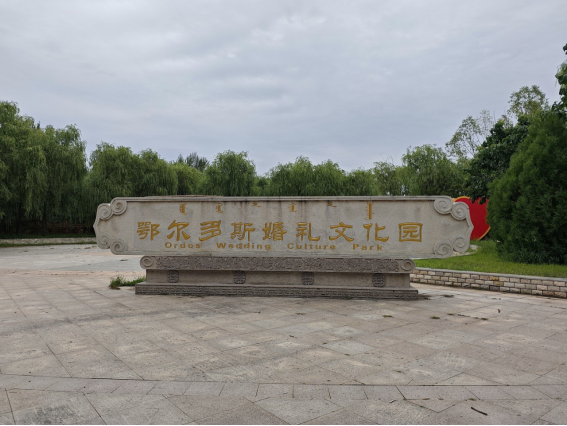
Kangbashi New District
Kangbashi New District is the political and cultural center of Ordos, known as the 'Grassland New City' and 'China's Dubai.' It is modern, spacious, and monumental, with landmark buildings such as the Ordos Museum, Library, Grand Theatre, and Culture and Art Center. Genghis Khan Square, the Ordos Wedding Culture Park, and the Wulanmulun Lake musical fountain are popular spots for residents and tourists. Kangbashi showcases Ordos's ambition and vitality in transforming from an energy-industry city into a modern, ecological city.
Ordos Museum
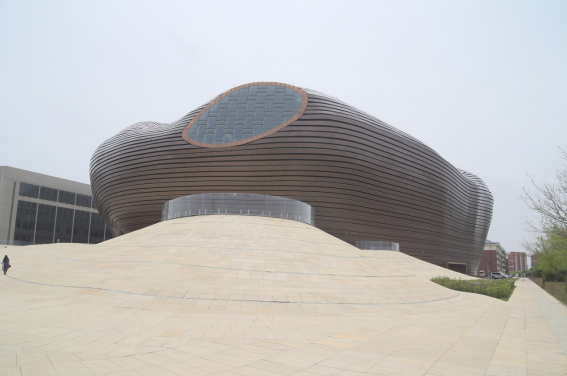
Ordos Museum
The Ordos Museum stands in Kangbashi New District; its exterior resembles a giant reddish-brown meteorite resting on the grassland, making it one of China's most recognizable modern museums. Its exhibitions systematically present Ordos's history from the Salawusu Paleolithic period, Zhukaigou culture, and Bronze Age to the northern peoples—the Xiongnu, Xianbei, Turkic, Tangut, and Mongols. It also displays rich paleontological fossils, Ordos bronzeware, and dinosaur fossils, offering the best window into this famous city beyond the Great Wall.
Uxin Banner Grassland
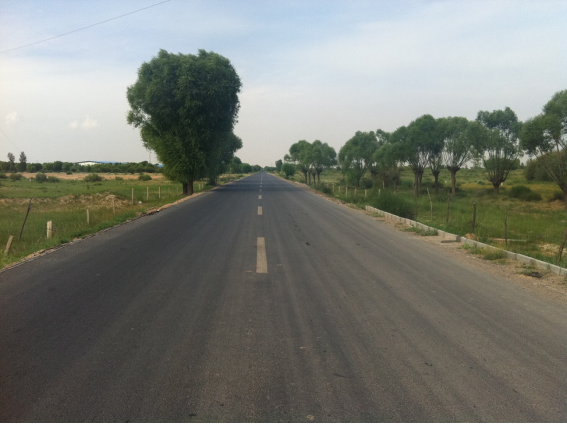
Uxin Banner Grassland
Uxin Banner lies in southwestern Ordos and is one of the areas where Mu Us sandy-land control has been most successful; it is also the birthplace of the Salawusu Site and Hetao Man culture. Today grassland, sandy land, wetlands, and farmland interweave; tree-lined roads and herds of cattle and sheep show the vitality of 'green advancing over sand.' The Uxin Banner grassland is an excellent place to experience the southern pastoral charm of Ordos and witness the ecological miracle of sand control.
V. Cultural Heritage
Ordos's cultural heritage is highly distinctive. Genghis Khan worship is a national intangible cultural heritage; the Darkhad guardians' 'Eight White Yurts' sacrificial rites are solemn and mysterious. The 'Ordos Wedding,' with its grand ceremony and all-night song and dance, is also listed as national intangible heritage. 'Ordos bronzeware' is famous for animal-patterned plaques and is an important specimen for studying Eurasian steppe bronze cultures. In addition, Kubuqi sand-control experience, Warring States/Qin Great Wall ruins, and the Arzhai Grottoes form Ordos's diverse and weighty historical picture.

Genghis Khan Mausoleum Palace
VI. Ethnic Culture & Folk Customs
Ordos is an important inheritor of traditional Mongol culture. The local Mongols preserve distinctive Ordos tribe dress, long-tune folk songs, chopstick dance, and bowl dance; Naadam wrestling, horse racing, and archery are fierce and festive. Tibetan Buddhism has a profound influence in Ordos, with several historic temples. The Mongol people are warm and hospitable, treating guests to milk tea, hand-grabbed lamb, and dairy wine; the horseback people's bold spirit remains alive.
VII. Local Cuisine
Dish | Description |
Hand-Grabbed Lamb | Ordos lamb is tender and free of gamey odor; boiled and eaten with dipping sauces for pure flavor. |
Shaomai | Thin wrappers filled with lamb and scallion, steamed into pomegranate shapes—a traditional Inner Mongolian breakfast. |
Sour Stew | A home-style stew of pickled cabbage, potato, glass noodles, and lamb—sour, fragrant, and appetizing. |
Mongol Milk Tea | Brick tea boiled with fresh milk, salt, and fried millet—savory, rich, and served with dairy snacks. |
Air-Dried Beef | Premium beef air-dried and shredded, chewy and flavorful—a travel essential on the grassland. |
VIII. Crafts & Specialties
Ordos abounds in specialties. Ordos cashmere is known as the 'fiber gem' and 'soft gold,' with Arbas white cashmere being the top grade. Mongol silverware, robes, leather paintings, felt art, Mongol knives, and saddles are exquisitely crafted. The area also produces coal, natural gas, rare earths, licorice, and hair vegetable moss; Arbas white cashmere goats and Hanggin Banner licorice are national geographical indication products.
IX. Getting There
Transport: Ordos Ejin Horo Airport, Otog Front Banner general airport, and the Ordos section of the Baotou–Xi'an high-speed railway connect the city to the rest of the country. Dongsheng and Dalad Banner have railway stations and long-distance bus terminals. It is about 1.5 hours by high-speed train from Hohhot to Ordos. Attractions are spread out, so car rental or chartered tours are recommended for desert and grassland visits.
X. Best Season & Itineraries
Best time to visit: The best travel season is May to October. June to August brings green grasslands and rich desert activities; September to October offers crisp air and magnificent desert light. Winter is cold and windy, but offers ice-snow Naadam and snow-covered desert landscapes.
Recommended itineraries:
· Sky-Sent Hero One-Day: Genghis Khan Mausoleum — Sacrifice Ceremony — Ejin Horo grassland.
· Desert Adventure Two-Day: Xiangshawan (camel riding, sand sliding, Lotus Hotel) — Kubuqi Desert (Seven Star Lake/Engebei).
· New City Culture Two-Day: Kangbashi — Ordos Museum — Ordos Wedding Culture Park — Wulanmulun Lake musical fountain.
XI. Economy
Ordos is a national strategic energy base, with proven coal reserves accounting for about one-sixth of China's total and natural gas reserves about one-third, making it a key source for the West-to-East Gas Pipeline. Relying on major firms such as Shenhua, Yitai, and Huineng, Ordos has formed a full coal–electricity–chemical–new-material industry chain. Meanwhile, cashmere products, equipment manufacturing, new energy (wind, solar, hydrogen, storage), modern agriculture and animal husbandry, and all-region tourism are booming. In 2023 regional GDP was about 580 billion yuan, with per-capita GDP among the highest in the country—a model for transformation and upgrading of resource-based cities.