Introduction to Jinzhou City and Its Famous Scenic Spots
City Introduction
Located in southwestern Liaoning on the northern coast of the Bohai Sea, Jinzhou occupies the core hinterland of the Western Liaoning Corridor. It is an important port city around the Bohai Sea and a regional central city in western Liaoning, enjoying the reputations of “Splendid Prefecture”, “Gateway of Mountains and Seas” and “Strategic Town of Western Liaoning”. With an urban history of more than 2,100 years, this ancient city carries a continuous cultural heritage spanning the Shang and Zhou dynasties, the Northern Wei Dynasty, the Liao Dynasty, and the Ming and Qing dynasties. Since ancient times, it has served as a crucial thoroughfare integrating Central Plains farming civilization and northern nomadic civilization. Ethnic groups including the Shanrong, Xianbei, Khitan and Jurchen thrived here, fostering an inclusive, resolute and gentle regional culture unique to western Liaoning. Affiliated with the ancient Guzhu State during the Shang and Zhou periods, the region pioneered grotto culture in the Northern Wei Dynasty and reached its cultural peak in the Liao Dynasty. Boasting abundant precious Liao-dynasty architectural relics, it ranks among the cities with the most well-preserved Liao cultural heritage in China. As the provincial capital of the former Western Liaoning Province in modern times, it long dominated the political, economic and cultural development of western Liaoning, accumulating profound metropolitan heritage.
Nestled between mountains and sea, Jinzhou boasts magnificent geographical scenery. It is backed by the renowned Wulu Mountain in the northeast, faces the vast Bohai Bay to the south, and is traversed by the Daling River, forming a unique urban pattern integrating mountains, seas, rivers and cities, combining the grandeur of northern mountains with the gentleness of Bohai coastal scenery. A nationally famous heroic red city, Jinzhou was the core battlefield of the Liaoshen Campaign. The crucial Battle of Jinzhou secured the overall liberation of Northeast China, shaping the city’s courageous, resolute and indomitable spiritual temperament. Equipped with a three-dimensional transportation system integrating seaports, airports, railways and highways, Jinzhou serves as a strategic hub connecting Northeast China with North China and the Bohai Sea. Blending time-honored Liao-dynasty charm, splendid mountain and sea landscapes, profound revolutionary history and prosperous commercial heritage, modern Jinzhou stands as a distinguished cultural city in western Liaoning with enduring ancient charm, magnificent natural scenery and profound heroic heritage.
Famous Scenic Spots in Jinzhou
1. Fengguo Temple in Yixian County
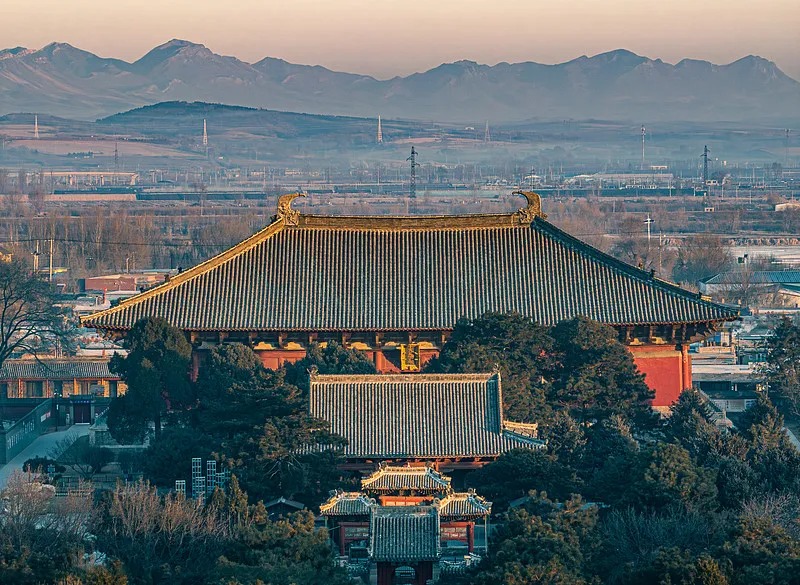
Constructed during the Kaitai reign of the Liao Dynasty with a history of over a thousand years, Fengguo Temple in Yixian County of Jinzhou ranks first among the three major existing Liao-dynasty temples in China. Honored as a “peerless national treasure of a thousand years” and “the foremost ancient temple of the Liao Dynasty”, it was highly praised by the architect Liang Sicheng as an unparalleled treasure of ancient Chinese architectural art. Bearing the splendid royal Buddhist culture and top-tier construction craftsmanship of the prosperous Liao Dynasty, it was an imperial temple authorized by the Liao royal family. Featuring grand specifications and supreme architectural rank, it fully witnesses the Khitan Dynasty’s prosperity in Buddhism, culture and national strength, completely preserving the overall layout and ritual system of Liao-dynasty royal temples.
The core hall, Mahavira Hall, is the largest and best-preserved wooden Liao-dynasty hall in China. With simple and vigorous architectural forms, exquisite bracket sets and magnificent beam frames, it perfectly embodies the powerful and unrestrained artistic style of Liao architecture. The hall houses seven giant painted Liao-dynasty Buddha statues, delicate flying apsara murals, thousand-year-old altar tables and stone carvings. The bright colors and solemn, vivid postures of the relics remain well-preserved after a millennium, representing the pinnacle of Liao-dynasty sculpture and painting art. Distinct from the exquisite and complicated styles of Ming and Qing architecture, Fengguo Temple embodies the extraordinary momentum of the Liao Dynasty. It serves as a core physical relic for the research of Liao-dynasty architecture, Buddhist culture, Khitan folk customs and northern art evolution, and stands as the most influential humanistic landmark of Jinzhou’s thousand-year Liao cultural heritage.
2. Liaoshen Campaign Memorial Hall
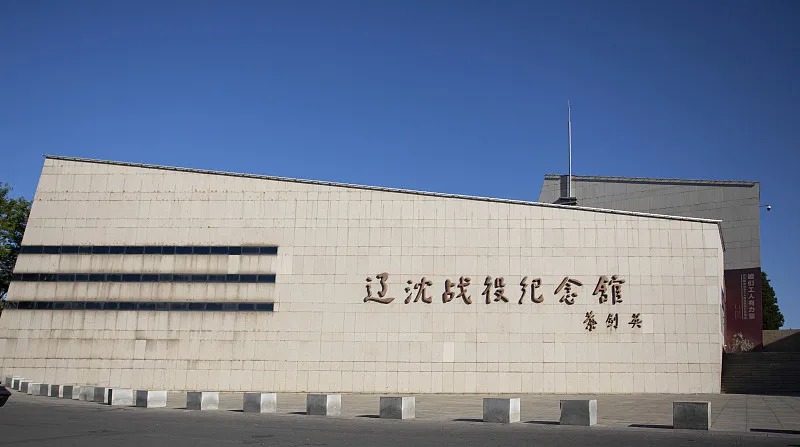
Located in downtown Jinzhou, Liaoshen Campaign Memorial Hall is the only national-level special memorial hall systematically displaying the entire process of the Liaoshen Campaign, serving as the core spiritual landmark of Jinzhou’s heroic red urban heritage. It preserves the most crucial and stirring extraordinary years of the Northeast Liberation War. Launched in 1948, the Liaoshen Campaign took the Jinzhou offensive as its core breakthrough. The capture of Jinzhou completely blocked the retreat of Kuomintang troops in Northeast China, reversed the regional battlefield situation in one fell swoop, and laid a solid foundation for the full liberation of Northeast China and the victory of the national Liberation War. Hence, Jinzhou is known as “the heroic city where the dawn of New China rises”.
The memorial park features a solemn and regular layout, including the main memorial hall, revolutionary martyr cemetery, monument and weapon exhibition hall. The museum collects numerous precious revolutionary cultural relics, wartime equipment, historical documents and martyr remains. Through scene restoration, graphic records, physical displays and optical-electric technologies, it comprehensively reproduces the strategic deployment, arduous battles and heroic deeds of the Liaoshen Campaign. The giant panoramic painting *The Capture of Jinzhou*, combined with sound, light and electric effects, vividly restores the fierce urban battle scenes with strong immersive shock. As a classic national red research and patriotic education base, it interprets the noble spirit of fearless sacrifice, courageous assault and overall dedication embodied by the Liaoshen Campaign, serving as a spiritual shrine for remembering the history of Northeast liberation and inheriting the red heritage.
3. Wulu Mountain Scenic Area
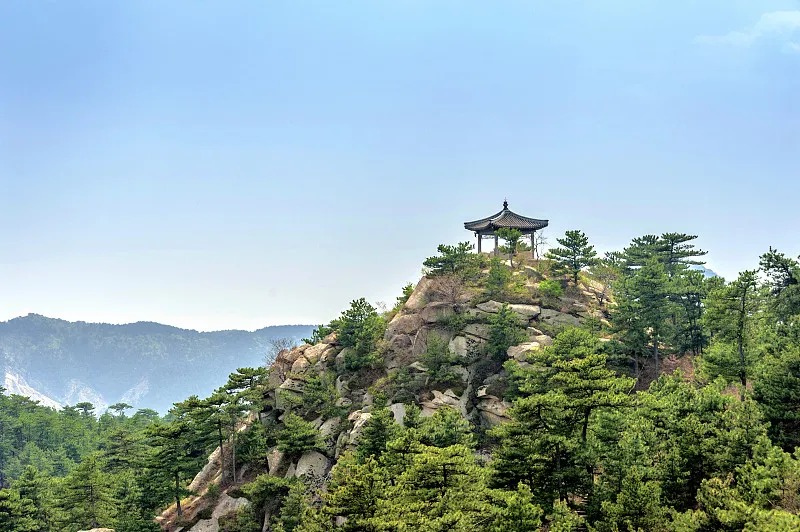
Situated in Beizhen City of Jinzhou, Wulu Mountain ranks first among the three major famous mountains in Northeast China and is a renowned imperial worship mountain in northern China. Formerly known as Wulü Mountain, it has been a sacred site for imperial enfeoffment and sacrifice for thousands of years, bearing profound heritage of northern mountain worship culture and landscape humanity in western Liaoning. From the Sui and Tang dynasties to the Liao, Jin, Ming and Qing dynasties, emperors of successive dynasties visited here for sacrifices, and numerous literati left poems and inscriptions. It is a rare cultural mountain in northern China integrating mountain ritual culture, religious culture, imperial heritage and natural ecology. Flourishing greatly in the Liao Dynasty, it served as a core sacred site for the Khitan royal family’s blessing and hunting, retaining a large number of Liao-dynasty palaces, steles and ancient temples.
The scenic area features rolling ridges, elegant peaks, vast forests and scattered ancient temples, combining the grandeur of northern mountains with the serenity of mountain secret realms. Boasting luxuriant vegetation and distinct four-season scenery, it presents blooming flowers in spring, cool forests in summer, dyed foliage in autumn and magnificent snow landscapes in winter with superior ecological scenery. The mountain is home to thousand-year-old ancient temples including Beizhen Temple, Qingyan Temple and Yuquan Temple, as well as imperial steles, cliff carvings and ancient plank road relics of successive dynasties, covered with profound humanistic traces. Perfectly integrating imperial sacrificial heritage, Liao royal culture, religious Zen charm and original mountain forest scenery, Wulu Mountain is the core representative of landscape culture in western Liaoning and a top scenic spot in Jinzhou featuring both natural beauty and profound humanity.
4. Guangji Temple Ancient Architectural Complex (Ancient Pagoda Park)
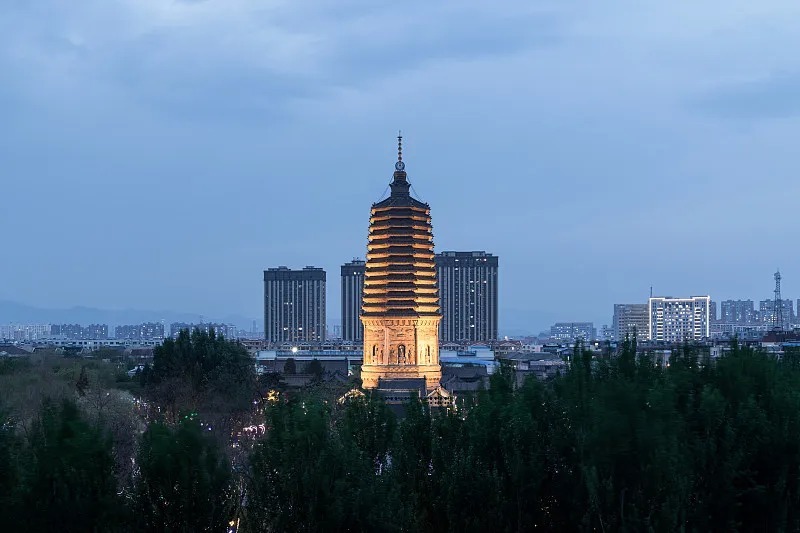
Located in the core of Guta District, Jinzhou, Guangji Temple Ancient Architectural Complex is the root of Jinzhou’s urban history and a symbolic carrier of the city’s thousand-year cultural heritage. Composed of the Liao-dynasty Guangji Temple Pagoda, Ming and Qing architectural complexes and Ancient Pagoda Park, it is one of China’s best-preserved scenic areas integrating Liao-dynasty pagodas and Ming-Qing ancient buildings, witnessing Jinzhou’s urban changes and cultural inheritance over more than 2,000 years. The towering thousand-year-old Liao-dynasty pagoda features exquisite carvings and standardized structures, representing a classic model of Liao pagoda architectural art. It has stood firm through thousands of years of wind, rain and earthquakes, fully demonstrating the superb craftsmanship of ancient artisans.
The entire complex integrates the vigorous charm of the Liao pagoda and the elegant verve of Ming and Qing courtyards. With a rigorous layout, simple halls and enduring incense, the temple bears the thousand-year history of Buddhist spread and folk belief culture in western Liaoning. The supporting Ancient Pagoda Park features serene scenery, lush greenery and crisscrossing trails, perfectly integrating thousand-year-old ancient architecture, urban gardens and earthly fireworks, forming a landmark blending old urban heritage and modern leisure. As a core witness to Jinzhou’s urban origin, Guangji Temple Pagoda Complex is not only a precious Liao-dynasty architectural relic, but also a vivid symbol of Jinzhou’s enduring thousand-year civilization, serving as a must-visit resort for exploring the profound heritage of the western Liaoning ancient city and appreciating the ancient charm of Jinzhou.
5. Oriental Huadi Wetland Scenic Area
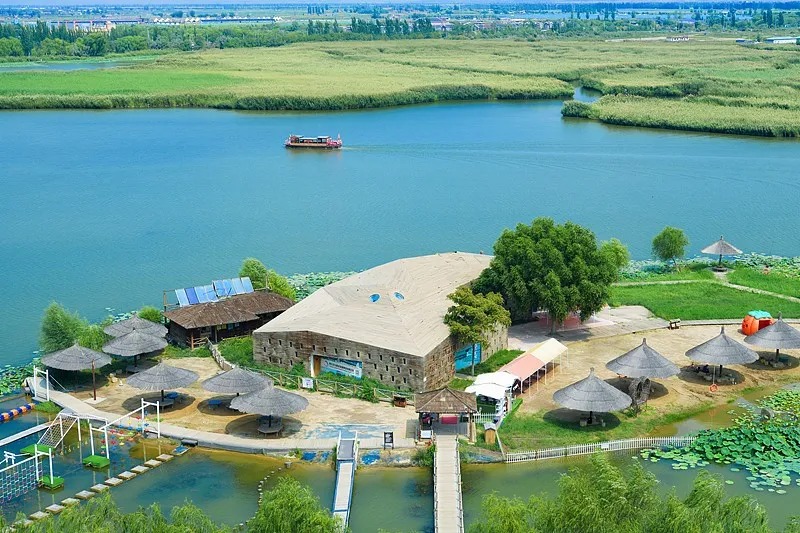
Nestled along the Bohai Sea coast of Jinzhou, Oriental Huadi Wetland Scenic Area is the largest and most ecologically superior coastal wetland resort in western Liaoning. Integrating wetland ecology, vast reed sea scenery, hot spring health preservation and coastal leisure, it serves as the core representative of Jinzhou’s coastal ecological features. Located in the core wetland zone on the northern shore of Bohai Bay, the scenic area features dense water systems, boundless reed marshes and extensive tidal flats, completely preserving the original coastal wetland ecosystem of the Bohai Sea and acting as a vital ecological barrier and migratory bird habitat in western Liaoning.
The resort boasts continuous ten-thousand-mu reed marshes, winding waterways, clear blue water and flocks of water birds, presenting distinct charming scenery in four seasons. In spring and summer, rolling reed waves and dancing water birds fill the wetland with vitality; in autumn and winter, golden reeds and quiet snow scenery interpret the vast artistic conception of coastal wilderness. Relying on superior geothermal resources, the scenic area builds a natural hot spring health preservation system, integrating wetland sightseeing, water tourism, ecological popularization and vacation leisure to form a characteristic cultural tourism model of “wetland + hot spring + coast”. Different from Jinzhou’s profound ancient architectural and revolutionary heritage, Oriental Huadi features pure ecology, quiet wilderness and warm health preservation, fully displaying Jinzhou’s ecological livable charm of coexisting mountains and seas, and serving as a rare coastal ecological leisure secret realm in western Liaoning.

 English
 French
 Spanish
 Russian
 Arabic
 Italy
Italy