
 English
 French
 Spanish
 Russian
 Arabic
 Italy
Italy
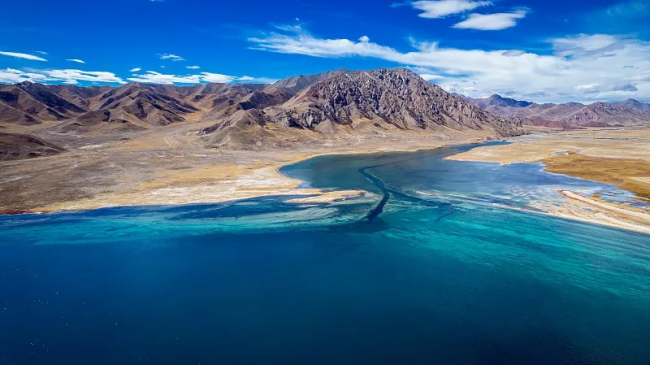
Yushu
Qinghai Province, China · Yushu
“Source of Three Rivers · Heart of Kham”
Contents
I. City Overview
II. Geography & Ecology
III. History
IV. Top Attractions
V. Cultural Heritage
VI. Ethnic Culture & Folk Customs
VII. Local Cuisine
VIII. Crafts & Specialties
IX. Getting There
X. Best Season & Itineraries
XI. Economy
I. City Overview
Yushu Tibetan Autonomous Prefecture lies in southern Qinghai, in the heart of the plateau, and is the headwater of the Yangtze, Yellow, and Lancang (Mekong) rivers—the 'Water Tower of China.' Yushu City (Jyekundo) is the cultural center of Kham Tibet. The prefecture's population is about 420,000, over 90% Tibetan. Snow mountains and endless meadows, dense Buddhist monasteries, famed mani-stone piles and horse festivals define it; after the 2010 Ms 7.1 earthquake, rebuilt with national support, it stands as a model of highland renewal and harmony between people and land.
Quick Facts
Location | S Qinghai, plateau heart (Three-Rivers-Source) |
Divisions | 1 county-level city (Yushu), 5 counties |
Area | ~267,000 km² |
Population | ~420,000 |
Ethnic groups | Tibetan (Kham) ~97% |
Avg. elevation | ~4,000 m |
Climate | Alpine sub-frigid semi-humid |
II. Geography & Ecology
Yushu sits at the core of the Three-Rivers-Source National Reserve. The Tanggula, Bayan Har, and Kunlun spurs crisscross it; the Yangtze's true source (Tuotuo/Tongtian), the Yellow's source (Gyaring), and the Lancang's source all rise here. Alpine meadows, glaciers, and lakes abound; wetlands like Longbao are home to the black-necked crane. High and ecologically fragile, it is an ecological barrier of 'Earth's Third Pole.'
III. History
Yushu was a throat of the Tang–Tibet road and a cradle of Kham culture. In the 7th century Princess Wencheng passed here on her way to Tibet, leaving the Princess Wencheng Temple and many legends; it long served as a southern-Qinghai stronghold and a Han-Tibet crossroads. On April 14, 2010 a Ms 7.1 quake caused heavy damage; with national support Yushu rebuilt a new city under an 'ecology-first' philosophy, crystallizing the Chinese nation's mutual aid.
IV. Top Attractions
Jiana Mani Stone City
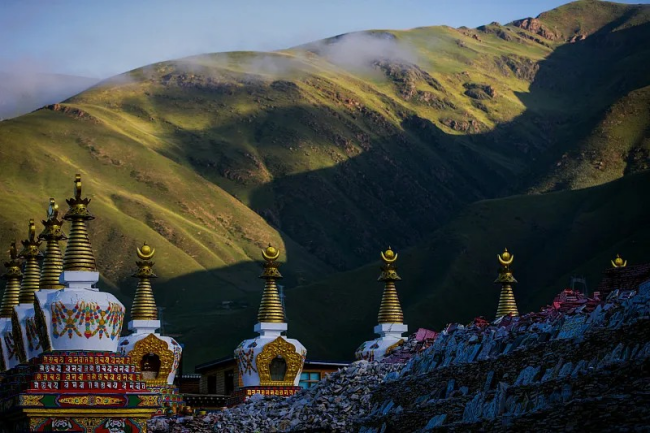
Jiana Mani Stone City
Founded in the 18th century by the First Jiana Living Buddha, the Jiana Mani is the world's largest mani stone pile. Billions of stones carved with mantras and Buddhas stack into a staggering 'miracle of humanity.' At rituals devotees circumambulate and add stones—Yushu's ultimate expression of faith and art.
Princess Wencheng Temple
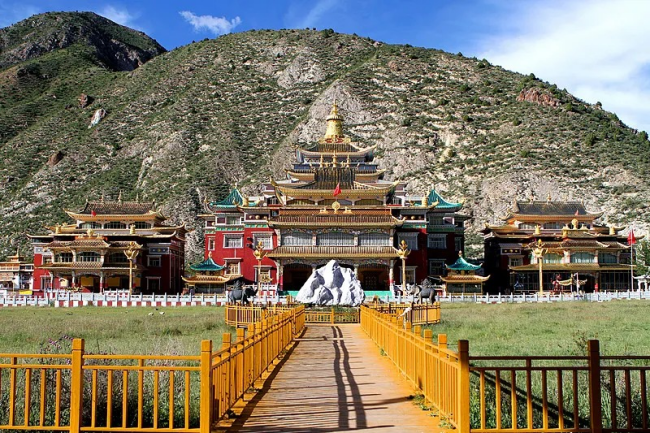
Princess Wencheng Temple
The Princess Wencheng Temple sits at the mouth of Lebagou, said to be founded in the 7th century when Princess Wencheng passed on her Tibet journey; cliff-carved niches hold reliefs of the princess and Buddhas. The gorge walls bear Sanskrit sutras and Buddhas—'Lebagou rock carvings'—tangible proof of Han-Tibet friendship and millennia of faith, a Major Historical Site.
Three-Rivers-Source (Sanjiangyuan)
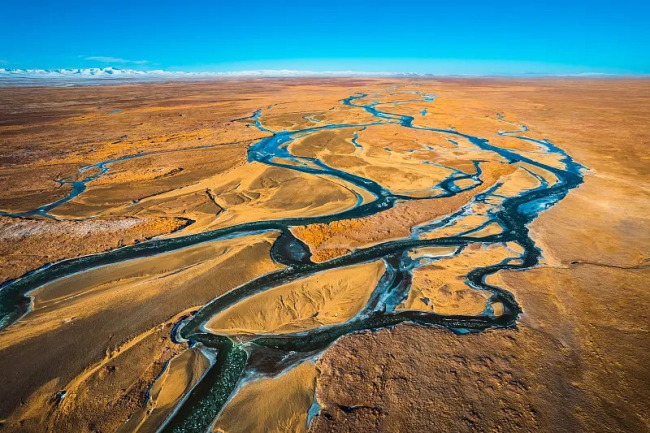
Three-Rivers-Source (Sanjiangyuan)
The Three-Rivers-Source National Park is China's largest, covering the alpine meadows, glaciers, and wetlands at the heads of the Yangtze, Yellow, and Lancang. An ecological 'water tower' for Asia, it is pristine and species-rich—snow leopard, white-lipped deer, and black-necked crane roam—a holy land to explore the 'Water Tower of China' and its conservation.
Jyekundo & Kham Culture
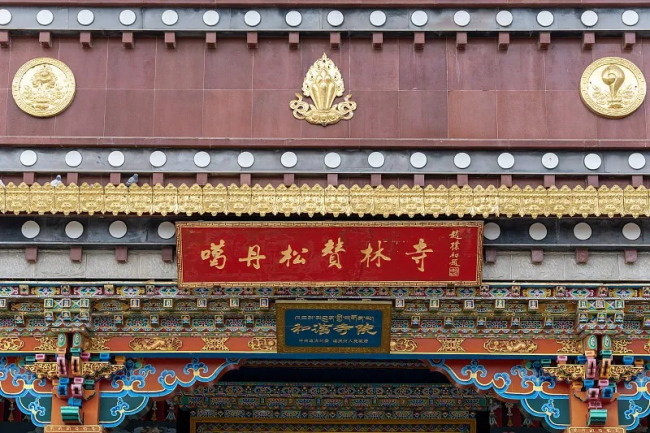
Jyekundo & Kham Culture
Yushu City (Jyekundo) is the trade and cultural hub of Kham. Its renewed post-quake town blends traditional Tibetan form with modern amenities. Prayer flags flutter, Tibetan dress dazzles; horse racing, guozhuang, and Gesar epic singing stay vivid. At summer's 'Yushu Horse Festival' tens of thousands gather—Kham spirit in full bloom.
Longbao Wetland
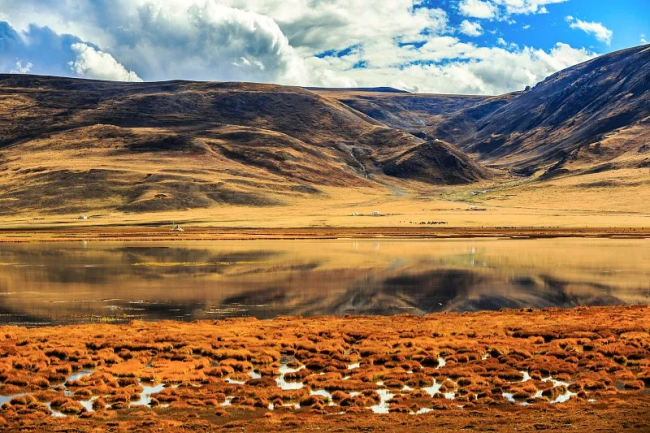
Longbao Wetland
Longbao Wetland National Reserve lies in Longbao Town, Yushu, where the Yiqu and Red rivers meet in alpine marsh at ~4,200 m. A dense web of water and rich meadow, it is a breeding and resting paradise for the black-necked crane, bar-headed goose, and ruddy shelduck, and a superb spot to observe plateau wetland ecology and migratory birds—hailed as 'the home of the black-necked crane.'
Longbao Wetland & Black-Necked Crane
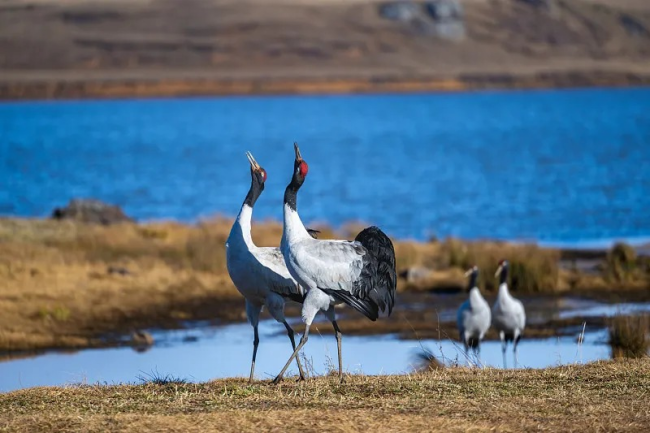
Longbao Wetland & Black-Necked Crane
Longbao National Reserve is a key breeding ground of the black-necked crane; in its ~4,200 m alpine marsh this 'sacred plateau bird' dances, feeds, and breeds. Rich in water plants and nearly untouched, it shares its wetlands with bar-headed geese and ruddy shelducks—a sanctuary for birding and ecological research.
V. Cultural Heritage
Yushu is a world-class cultural treasure. The Tang–Tibet road and Wencheng legends thread a millennium of Han-Tibet exchange; the Jiana Mani and Lebagou carvings crown Tibetan stone art; the 'Yushu Horse Festival' is national intangible heritage; the Gesar epic, Tibetan song-dance, and mani culture endure. Post-2010 rebuilding made 'New Yushu' a symbol of resilience and hope.
VI. Ethnic Culture & Folk Customs
Yushu is overwhelmingly Tibetan (Kham), with a vivid Kham identity. Horse festivals, Shoton, and butter-lamp rites take turns; Gesar epic singing, guozhuang, and pastoral long-song echo the steppe. Mani piles, prayer flags, and circumambulation are daily faith. Herders guard this Three-Rivers homeland with warm hospitality and devout belief.
VII. Local Cuisine
Dish | Description |
Tsampa | Roasted barley flour kneaded with butter tea—the staple Tibetan food, portable and filling. |
Butter Tea | Brick-tea churned with butter and salt—savory, rich, the highland's warming energy source. |
Air-Dried Beef | Naturally air-dried yak beef—firm, flavorful, the classic Tibetan trail food. |
Yak Yogurt | Naturally fermented yak milk—thick, tart, often with sugar. |
Hand-Grabbed Mutton | Bone-in mutton boiled plain—pure and savory, the festival and hospitality centerpiece. |
VIII. Crafts & Specialties
Yushu's crafts are rooted in Buddhist art. Thangka painting, mani-stone carving, and gilt-bronze iconography are refined; Tibetan carpets, pulu (wool cloth), silverware, and prayer beads fill town and village; plateau herbs like cordyceps and fritillaria are prized gifts. At horse festivals artisans gather—tack, costumes, and ornaments show Kham taste and skill.
IX. Getting There
Transport: Yushu Batang Airport links to Xining, Chengdu, and Lhasa; G214 runs through it to Xining and Qamdo. From Xining it is about 800 km / two days by car, or ~1.5 hours by air. Sites are scattered and high—allow ample acclimatization and respect local religion and custom.
X. Best Season & Itineraries
Best time to visit: Best season is June to September—green meadows, wildflowers, and the liveliest horse festival in July–August; Sanjiangyuan and Longbao teem with waterbirds. Winter is severe with snow on some roads, yet offers serene snow peaks and pure faith.
Recommended itineraries:
· Culture Day: Jyekundo Monastery — Jiana Mani — Princess Wencheng Temple (Lebagou).
· Eco 2-Day: Sanjiangyuan — Longbao crane wetland — Batang grassland.
· Festival Deep Tour: midsummer Yushu Horse Festival — Kham folkways — mani blessing.
XI. Economy
Yushu's economy rests on eco-livestock, clean energy, and culture-tourism under an 'ecology-first' principle. Highland yak, Tibetan sheep, and herbs like cordyceps are famed; the Sanjiangyuan National Park drives eco and study tourism; post-quake rebuilding laid a livable base. Yushu is forging a highland path of beauty, ethnic unity, and green development.