
 English
 French
 Spanish
 Russian
 Arabic
 Italy
Italy
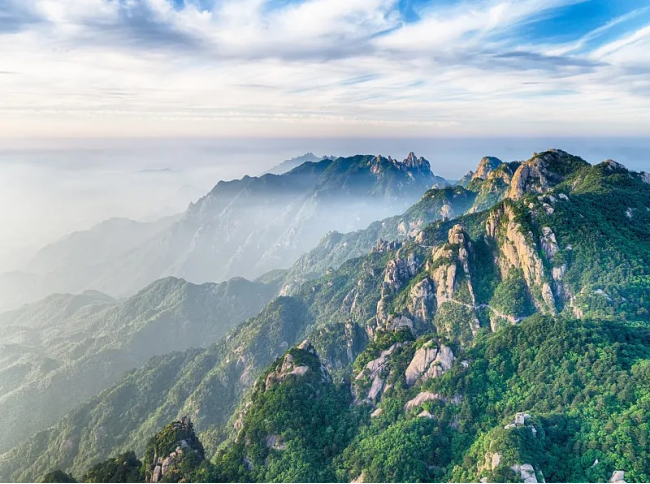
Chizhou
Anhui Province, China · Chizhou
“Sacred Jiuhua · A River of Poetry for a Thousand Years”
Contents
I. City Overview
II. Geography & Ecology
III. History
IV. Top Attractions
V. Cultural Heritage
VI. Ethnic Culture & Folk Customs
VII. Local Cuisine
VIII. Crafts & Specialties
IX. Getting There
X. Best Season & Itineraries
XI. Economy
I. City Overview
Chizhou lies in southern Anhui on the south bank of the Yangtze, where the Wannan hills meet the riverside plain. It governs Guichi District plus Dongzhi, Shitai, and Qingyang counties, anciently 'Qiupu.' Covering about 8,272 km² with a population around 1.3 million, it is world-famous for Mount Jiuhua—one of China's four sacred Buddhist mountains and the bodhimanda of Ksitigarbha—with a millennium of devotion. The Qiupu River drew Li Bai on five visits, inspiring seventeen 'Qiupu Songs'; Shengjin Lake and Guniujiang shelter rare species in wetland and primeval forest. Where landscape meets Zen, Chizhou is an 'ecological, sacred, poetic city.'
Quick Facts
Location | S Anhui, Yangtze south bank |
Divisions | 1 district, 3 counties |
Area | ~8,272 km² |
Population | ~1.3 million |
Ethnic groups | Han |
Highest peak | Guniujiang 1,727 m |
Climate | Humid subtropical |
II. Geography & Ecology
Chizhou leans on the Huangshan spur and Jiuhua to the south and faces the Yangtze to the north, high in the south, low in the north. Mount Jiuhua rises with 99 lotus-like peaks; the Qiupu and Qingxi rivers wind to the Yangtze; Shengjin Lake is a key wintering ground for migratory birds on the middle-lower Yangtze; Guniujiang preserves the last primeval forest of East China. With forest coverage over 60% and excellent air quality year-round, 'mountain-water Chizhou' is well earned.
III. History
Chizhou was established as a prefecture in 621 AD (Tang), named for the Chikou and Qiupu areas, long a famed Jiangnan town and Buddhist site. In the Tang, Li Bai visited Qiupu five times, writing lines like 'thousands of tanoak trees, myriad privets'; from the Tang, with the Indian monk Jin Qiaojue (Ksitigarbha's incarnation) preaching here, Jiuhua became an unbroken center of devotion. Poets Du Mu, Su Shi, and Wang Anshi left verses, giving Chizhou a dual lineage of 'river of poetry' and 'Buddhist kingdom.'
IV. Top Attractions
Mount Jiuhua
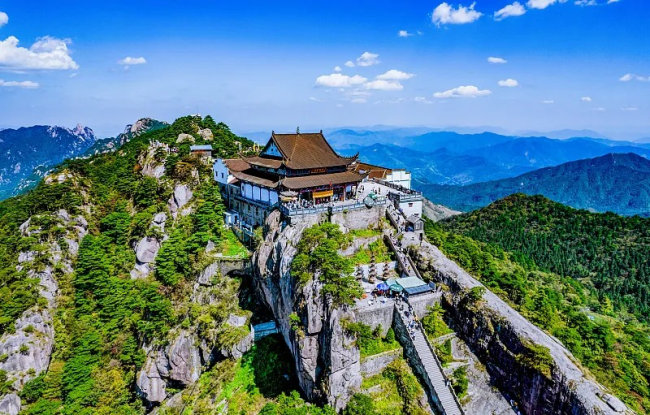
Mount Jiuhua
In Qingyang, Mount Jiuhua is one of China's four sacred Buddhist mountains and the bodhimanda of Ksitigarbha, with 99 temples and over a thousand monks—'the Lotus Buddha Kingdom.' Huacheng Temple is the founding monastery; the Flesh Hall enshrines the Tang monk Jin Qiaojue's incorrupt body; the Centenary, Qiyuan, and Tiantai temples dot the slopes. On Ksitigarbha's birth and enlightenment days pilgrims flock in—a sacred, cloud-watching retreat.
Great Vow Cultural Park
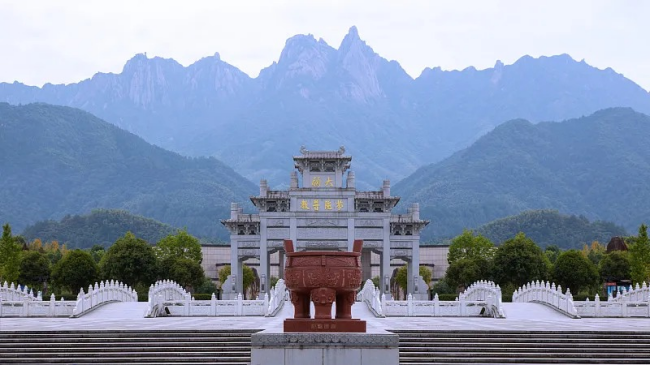
Great Vow Cultural Park
At Jiuhua's northern foot, the Great Vow Cultural Park centers on a 99 m open-air bronze Ksitigarbha—among the world's tallest Buddhist statues—solemn with a pearl in one hand and a mudra in the other. Blending worship, culture, and tourism, its lotus pedestal and grand plaza embody the 'great vow,' a new landmark of Jiuhua pilgrimage.
Qiupu River
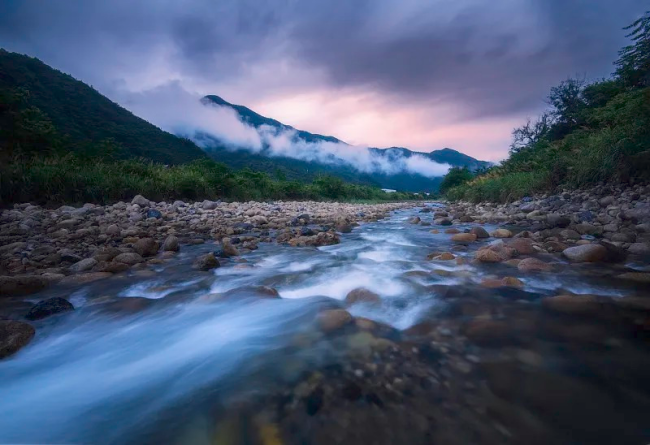
Qiupu River
Rising in Qimen and flowing through Chizhou to the Yangtze, the Qiupu River is immortalized by Li Bai's seventeen 'Qiupu Songs,' hailed as 'China's most beautiful river of poetry.' Its clear water and dark-green banks invite drifting where 'the river is a bolt of silk.' Old fishing villages and ferries remain—ideal for tracing Tang poetic moods and waterfront leisure.
Guniujiang
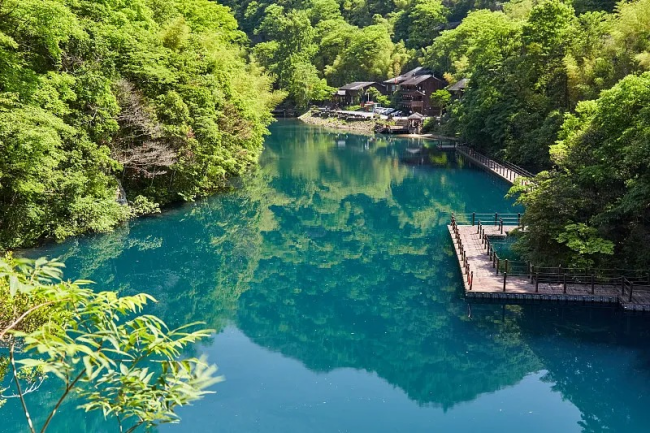
Guniujiang
On the Shitai–Qimen border, Guniujiang's 1,727 m summit is the third-highest in southern Anhui and preserves East China's only intact mid-subtropical primeval forest—'West Huangshan,' a 'green natural museum.' Waterfalls leap, ancient trees tower, sea of clouds appears often, and clouded leopard, black muntjac, and Elliot's pheasant dwell here—a secret realm for cooling off, research, and eco-wellness.
Xinghua Village
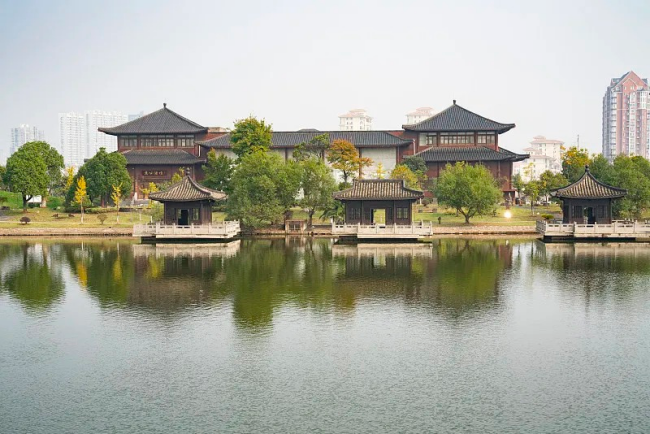
Xinghua Village
West of Chizhou city, Xinghua Village is famed by Du Mu's late-Tang poem 'A Question on the Qingming Festival'—'where is the tavern? the shepherd boy points to Xinghua Village.' With bridges, streams, and wine shops, the restored poetic village revives the Jiangnan spring of 'wine flags among apricot blooms'; the Apricot Festival each Qingming brings folk shows—a pastoral spot to drink and recall the Tang–Song poetic spirit.
Shengjin Lake
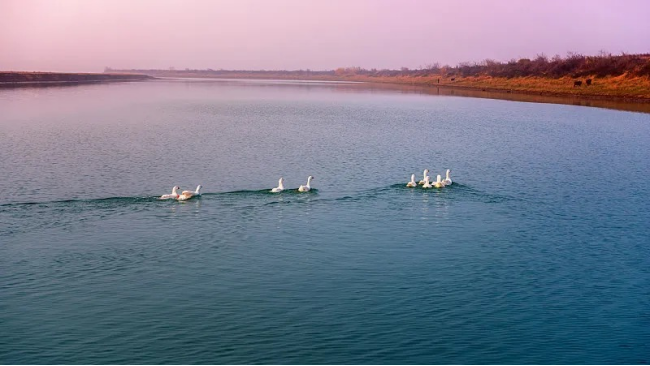
Shengjin Lake
In eastern Chizhou on the Yangtze's north bank, Shengjin Lake is a national nature reserve and Ramsar wetland, its name from a 'daily gold' legend but famed for 'ten-thousand birds.' Each winter tens of thousands of hooded cranes, Oriental white storks, and whooper swans winter here; rustling reeds and crane calls earn it 'China's Crane Lake'—a paradise for birding and wetland study.
V. Cultural Heritage
Chizhou's heritage pairs Buddhist culture with poetic tradition. Since the Tang, Jiuhua's Ksitigarbha devotion—temple architecture, incorrupt bodies, and rituals—forms a unique Buddhist legacy; the Qiupu River, through Li Bai, is a model 'river of Chinese poetry.' Chizhou nuo opera ('living fossil of theatre'), Qingyang tune, and Dongzhi lanterns are national intangible heritage; Shitai Mulian opera and Jiuhua fairs add color—a multifaceted 'Buddhist poetic city.'
VI. Ethnic Culture & Folk Customs
Chizhou is mainly Han, with plain, courteous folkways that honor learning. Jiuhua's fairs and Buddha-bathing festival are solemn—pilgrims ascend with incense and temple music; riverside dragon boats and lantern fairs bustle, while Qingyang tune and nuo opera take the stage, archaic and mystic. Rustic glutinous rice cakes and fish feasts carry the warm riverside life.
VII. Local Cuisine
Dish | Description |
Jiuhua Buddhist Vegetarian | Jiuhua temple vegetarian cuisine is plain and wholesome—bamboo, mushroom, and tofu shaped like meat—embodying 'Zen and food as one,' a must for pilgrims. |
Chizhou Rice Cake (Xiaoba) | Round rice-flour cakes pan-fried with red-bean, radish, or pork filling—crisp outside, sticky inside, savory or sweet—a street breakfast. |
Qiupu Mandarin Fish | Fresh Qiupu mandarinfish steamed or braised—tender, naturally savory, echoing the river's watery flavor. |
Dongzhi Wheat Fish | A Dongzhi specialty—tiny silver river fish, dried and stir-fried with egg or souped—savory and appetizing. |
Shitai Selenium Tea | Shitai, 'China's ecological selenium capital,' grows selenium-rich green tea—fragrant, sweet, a healthy signature brew. |
VIII. Crafts & Specialties
Chizhou's produce and crafts carry Jiangnan charm. Jiuhua Buddhist statuary, woodcarving, and ritual ware are refined; Qingyang-tune masks and Chizhou nuo masks—archaic and mystic—are national heritage; Shitai selenium tea, Dongzhi wheat fish, and Xiaokeng green tea are renowned. Cormorant fishing and bamboo fishing gear along the Qiupu preserve the Yangtze fisherfolk's wisdom.
IX. Getting There
Transport: Chizhou Jiuhua Airport links several Chinese cities; the Nanjing–Anqing intercity and Chizhou–Huangshan high-speed lines connect it, about 1–2 hours from Nanjing, Hefei, and Huangshan; the Hurong and Jingtai expressways pass through. Jiuhua has shuttles and cableways; Shengjin and Guniujiang are best by car—book eco-sites ahead.
X. Best Season & Itineraries
Best time to visit: Spring (Mar–May): apricot blooms and green Qiupu; summer (Jun–Aug): cool Jiuhua and Guniujiang retreats; autumn (Sep–Nov): crisp air for summit pilgrimage; winter (Dec–Feb): Shengjin Lake's tens of thousands of birds—best for cranes.
Recommended itineraries:
· Pilgrimage One-Day: Jiuhua (Huacheng–Flesh Hall–Tiantai) — Great Vow Park.
· Poetic Eco 2-Day: Qiupu River drift — Xinghua Village — Shengjin Lake birding.
· Primeval Forest 3-Day: Guniujiang — Shitai Guantan — Xianyu Mountain selenium wellness.
XI. Economy
Chizhou pursues 'ecology as the city foundation, tourism as its prosperity,' a key Anhui eco-tourism and wellness destination. Jiuhua drives Buddhist-culture, study, and B&B industries; Shengjin and Guniujiang boost conservation and birding; selenium tea, specialty aquaculture, and green food processing grow steadily. With the Yangtze shore and high-speed rail, Chizhou is shifting from a farming city toward green, high-quality development—'lucid waters and lush mountains are gold and silver.'