
 English
 French
 Spanish
 Russian
 Arabic
 Italy
Italy
Chinese Surname Culture
I. Overview of Surname Culture
China's surname culture is a core component of traditional Chinese culture, with a history spanning thousands of years, serving as an important vehicle for the transmission of the Chinese national lineage, family continuity, and cultural heritage. Surnames are symbols that identify familial kinship ties, carrying rich content such as the origins of families, their migrations, clan rituals, and family traditions and precepts.
Unlike foreign family systems, Chinese surnames are not merely simple alphanumeric identifiers; they embody concepts of family and nation, ethical order, clan culture, and traditional virtues. From ancient times to the present, Chinese people have placed great importance on "tracing their roots, identifying their ancestors, and returning to their ancestral lineage," making surname culture an essential bond for maintaining national cohesion and preserving Chinese civilization.
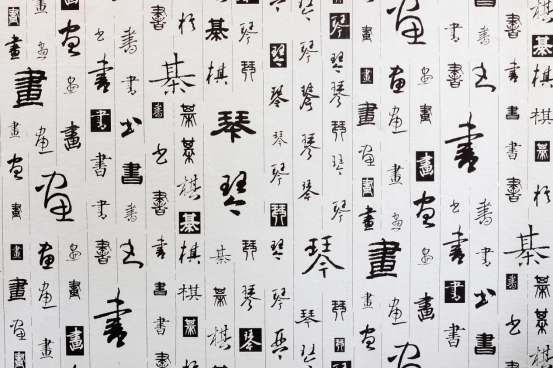
II. The Origins and Distinctions Between Surnames and Clan Names
In ancient times, the terms "xing" and "shi" were entirely distinct concepts, each with its own function and meaning; it was only after the Qin and Han dynasties that they gradually merged into a single term known as "xingshi."
1. The Origin of Surnames
The surname system originated in matrilineal clan societies, serving to distinguish blood-related groups and prevent endogamy within the same clan. The eight major ancient surnames often contained the "nü" (female) character, symbolizing matrilineal lineage; these surnames were: Ji, Jiang, Si, Ying, Yun, Gui, Yao, and Ji. A surname represents one's ancestral roots and primary clan affiliation, remaining unchanged across generations.
2. The Origins of the Family
The "Shi" originated in patrilineal societies and represents a branch of the surname system. As ethnic groups expanded, populations grew, and branches migrated, members of the same surname dispersed across different regions; they then used fiefdoms, official positions, places of residence, or titles as their branch identifiers—thus giving rise to the term "Shi." The "Shi" signifies a person's branch identity, social status, and regional affiliation.
3. Unified Surname System
From the Spring and Autumn and Warring States periods through the Qin and Han dynasties, the patriarchal system underwent transformation, and social class mobility intensified; in this process, the distinction between "surname" (xing) and "clan name" (shi)—which previously indicated hierarchical status—was gradually eliminated, and the two concepts merged into a unified concept known as "surname and clan name," which has been used ever since.
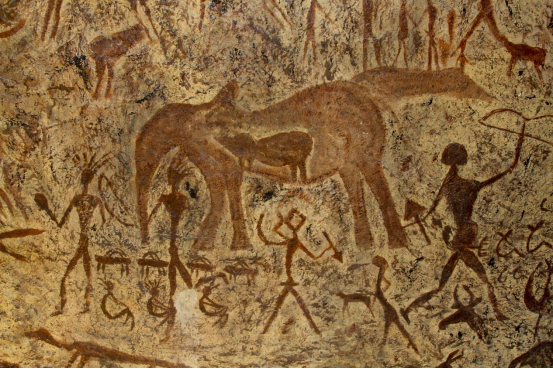
III. The Main Sources of Chinese Surnames
China's surname system is vast and has a well-documented historical origin; the formation of the vast majority of surnames can be categorized into the following groups:
1. Originates from ancient clans and ancient surnames
The continuous differentiation and evolution of the eight major ancient surnames have given rise to hundreds of surnames, representing the most ancient origins of Chinese surnames; for example, the surnames Zhou, Wu, Zheng, and Wang all derive from the Ji surname, while Lü and Xu derive from the Jiang surname.
2. Derived from the fiefdom and the state name
In ancient times, feudal lords and nobles were granted fiefs across various regions; their descendants subsequently adopted these fiefdoms or territories as their surnames. Examples such as Qi, Lu, Song, Qin, Chu, Zhao, and Wei all derive their names from the names of ancient feudal states.
3. Derived from official positions and occupations
In ancient times, family surnames were derived from the official positions or occupations held by successive generations, passed down through generations. Examples include Situ, Sima, Sikong, Shiguan, Yuezheng, Tao, and Jiang.
4. Derived from place of residence and geomorphology
When a family resides in specific landscapes, orientations, or geographical locations, they derive their surname from these environmental features—such as "Dongguo," "Ximen," "Nanguo," "Jiang," "He," "Shan," or "Shi."
5. Derived from ancestral posthumous titles, noble ranks, and family lineages
The surname is determined based on the posthumous titles, honorary titles, noble ranks, or family order of ancestors; examples include Wen, Wu, Bo, Zhong, Shu, and Ji.
6. Ethnic minority surname changes and bestowed surnames
Throughout history, ethnic minorities underwent Hanization and ethnic integration, with numerous tribes adopting Han surnames; simultaneously, ancient emperors would grant surnames to meritorious officials and members of foreign ethnic groups, thereby giving rise to new surname branches.
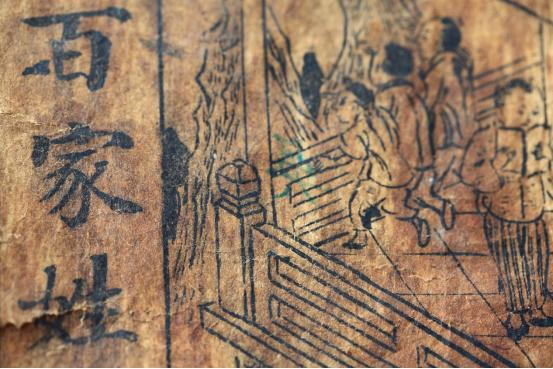
IV. Common Contemporary Surnames and Their Characteristics
China has thousands of existing surnames, with approximately over a hundred being commonly used in daily life, and their population is highly concentrated among the most prevalent surnames. The most representative common surnames in contemporary China are: Wang, Li, Zhang, Liu, Chen, Yang, Huang, Zhao, Wu, and Zhou—collectively known as the "Top Ten Surnames" —which have large population bases and widespread distribution.
Chinese surnames exhibit distinct regional distribution patterns: in northern China, surnames such as Wang, Li, Zhang, and Liu are most prevalent; in southern China, surnames like Chen, Lin, Huang, and Yang are widely distributed; while certain niche or distinctive surnames are concentrated only in specific regions, reflecting strong local cultural characteristics.
V. Traditional Surname Folklore and Cultural Connotations
1. Genealogy Culture
Genealogical records and family trees serve as the core vehicles of surname culture, documenting family origins, lineage succession, migration histories, members 'achievements, and family traditions and precepts. Compiling or updating these records is an important traditional practice among Chinese people for honoring their ancestors and relatives as well as preserving family values; it also represents a vital means of sustaining China's cultural heritage.
2. Ancestral Temple Worship Culture
The ancestral hall serves as a venue where members of the same clan perform rituals to honor their ancestors, gather for discussions, and preserve family traditions. During traditional festivals or major ancestral worship ceremonies, clan members assemble at the ancestral hall to commemorate their forefathers, strengthen familial bonds, and embody the traditional Chinese virtue of honoring the past and remembering ancestors.
3. Character Generation Culture
The vast majority of clans have their own exclusive generational naming conventions, utilizing fixed poetic lines and specific characters to distinguish generations, thereby establishing a clear hierarchy between elder and younger members and delineating distinct generational ranks. This naming tradition regulates familial ethics, sustains family order, and represents a vital manifestation of traditional ritual culture.
4. Transmission of Family Traditions and Precepts
All major clan lineages have preserved their own distinctive family traditions and precepts, which advocate for loyalty, filial piety, benevolence, and righteousness; encourage diligence, thrift, and a commitment to goodness; promote education and self-cultivation; emphasize integrity as the foundation of personal conduct; guide future generations; and nurture successive generations—constituting an integral part of traditional moral education culture.

VI. The Value and Significance of Surname Culture
1. The value of surname heritage: Surnames record the origins and migration trajectories of ethnic groups, serving as the core basis for Chinese people to trace their roots and understand their family history.
2. Cultural Heritage Value: Surnames embody patriarchal rituals, family traditions and precepts, as well as folk customs, thereby sustaining the millennia-old Chinese civilization.
3. National Cohesion Value: Regardless of geographical location—whether in China or abroad—Chinese people with the same surname share common origins and ancestry, thereby strengthening their sense of national identity and cohesion.
4. Historical research value: The evolution, migration, and integration of surnames provide an intuitive reflection of China's historical transformations, ethnic convergence, and regional development trajectories.
VII. Cultural Tips
1. In ancient times, "men used 'shi' (clan name) while women used 'xing' (surname)" to distinguish between superior and inferior status and to regulate intermarriage; this practice served as a crucial hallmark of early social civilization.
2. In modern society, gender equality allows children to adopt either their father's or mother's surname, reflecting the progress of our era and cultural inclusivity.
3. No surname is inherently superior or inferior; each surname possesses its own unique historical origins and cultural heritage, and all constitute an integral part of Chinese surname culture.