
 English
 French
 Spanish
 Russian
 Arabic
 Italy
Italy
Chinese Chess Culture
Go is a vital component of China's outstanding traditional culture, often referred to alongside the qin, calligraphy, and painting as the "Four Arts of the Literati"; it represents a unique artistic form through which Chinese people have cultivated their character, enlightened their wisdom, and contemplated the Great Dao over thousands of years. Chinese Go is not merely a game of strategy but rather a cultural carrier that integrates philosophy, strategic thinking, aesthetics, and etiquette. Within its compact board lies the universe's myriad phenomena, life philosophies, and wisdom for both family and nation; having been passed down through millennia, it continues to radiate vibrant vitality to this day.
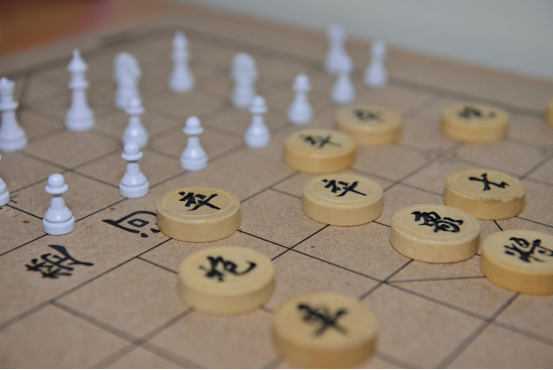
I. The Origin and Development of Chinese Chess Art
The history of Chinese board games is exceptionally long, dating back to the pre-Qin period; through several generations of innovation and evolution, it has gradually developed into a well-established and profoundly rooted cultural tradition of board game art.
Go is the oldest board game in China, traditionally believed to have originated during the reigns of Yao and Shun; the *Shiben* records: "Yao created Go, and Dan Zhu was particularly skilled at it." During the Spring and Autumn and Warring States periods, Go had already gained widespread popularity among the general public, becoming a means for scholars to cultivate their character and enhance their intellect. In the Han and Wei dynasties, Go gradually moved beyond its simple game-playing nature, acquiring metaphysical and philosophical connotations, with literati and refined individuals often gathering around the game to socialize. The Tang and Song dynasties marked the golden age of Go's development, during which the imperial court established the position of "Qi Daizhao" (Court Go Master), the practice of playing Go among literati and artists became commonplace, Go techniques and theories matured significantly, and a vast number of game records and literary essays on Go were preserved. During the Ming and Qing dynasties, diverse folk schools of Go emerged, with the art form reaching its zenith, and various classic game records have been passed down to the present day.
The development of Chinese chess occurred somewhat later than that of Go; its origins trace back to gambling games from the pre-Qin period, evolving through the Qin, Han, Sui, and Tang dynasties, incorporating military strategies and formations, and finally taking shape as the modern form of Chinese chess during the Song Dynasty. During the Song Dynasty, street-based chess games became highly popular, and Chinese chess entered the homes of ordinary people, becoming a recreational and intellectual pastime accessible to all. During the Ming and Qing dynasties, the theory of Chinese chess continued to mature, folk chess clubs proliferated, and a well-established competitive system was established—one that combined both entertainment value and strategic depth.
In addition, traditional Chinese board games also include Five-in-a-Row, Checkers, and Double Land, among others—offering a rich variety of genres that cater to different groups of people, collectively forming a diverse system of Chinese board games.
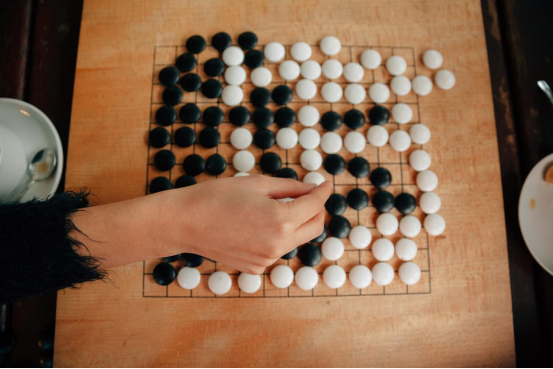
II. Two major board games: Go and Chinese Chess
Among the numerous traditional board games, Go and Xiangqi are the most representative; they exhibit vastly different styles and each has its own unique merits, respectively embodying distinct Chinese ways of thinking and philosophy of life.
(1) Go: Following the Way of Nature; comprehending the Dao through the overall game.
The Go board consists of 19 vertical and 19 horizontal lines, creating 361 intersection points where black and white stones compete. There are no fixed move sequences nor distinctions between different types of stones; yet its rules are remarkably simple yet offer endless possibilities of variation. Since ancient times, it has been said that "no two games of Go have ever been identical." The essence of Go lies in the opening phase, strategic trade-offs, careful calculation, and the overall game plan—prioritizing control over immediate gains or losses and focusing instead on guiding the overall course of the game.
Go embodies profound Taoist philosophy: the black and white stones correspond to the Yin and Yang poles; the square grid of the board symbolizes Heaven and Earth, or the Qian and Kun realms; and the process of playing the game serves as a journey toward comprehending the principles of "following nature's way" and "the mutual generation of void and substance." The ethos of "no regrets in placing stones" and "moderation in advancing or retreating" teaches players how to exercise patience in decision-making, prioritize the greater good, and cultivate a mindset characterized by composure, meticulousness, and foresight. As a game that emphasizes abstract thinking and strategic planning, Go has long been a classic means for scholars and refined individuals to cultivate their character, attain spiritual enlightenment, and refine their moral sensibilities.
(2) Chinese Chess: Strategic deployment of troops – balancing knowledge and action with appropriate restraint.
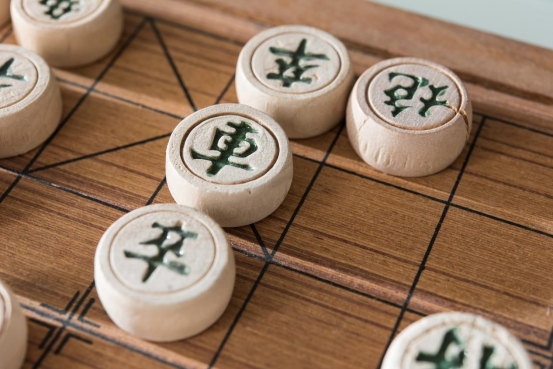
Xiangqi is inspired by ancient Chinese military strategies; its board features the "Chu River and Han Boundary," and its pieces include generals, ministers, advisors, chariots, horses, cannons, and soldiers—each fulfilling specific roles with distinct movement patterns, clear rules, and logical structure. The core of Xiangqi gameplay lies in deploying troops, balancing offense and defense, adapting to local conditions, and emphasizing careful step-by-step progression and precise strategic moves.
Xiangqi condenses ancient Chinese military strategy and social conduct principles, with each piece having distinct ranks and specific functions—emphasizing both the fulfillment of individual roles and adherence to one's duties, while also highlighting collaborative coordination and flexible adaptation. The confrontation along the "Chu River and Han Border," as well as the strategic game of offense, defense, advancement, and retreat, embodies the Chinese concept of the "Middle Way" and dialectical thinking, combining bold initiative with wisdom in pursuing progress through stability. Xiangqi is easy to understand, has a low barrier to entry, combines competitive elements with entertainment value, and stands as the most widely popular traditional board game among the general public.
III. The Core Cultural Connotation of Chinese Chess Art
1. Cultivate personal integrity and nurture moral character
The art of Go embodies the principles of human conduct; in the process of playing Go, the cultivation of one's character is paramount. As the ancients said, "Go is an art of virtue"; playing Go requires a commitment to making moves without regret, observing the game without speaking, and maintaining composure whether winning or losing. During the course of a game, one must exercise self-control to overcome impulsiveness, remain calm and focused, avoid arrogance when victorious, and never succumb to discouragement when defeated. Over time, this practice can temper one's character, cultivate a noble disposition, and foster excellent virtues such as humility, steadiness, and rationality—this very quality distinguishes the art of Go from ordinary games.
2. Inspiring wisdom and honing critical thinking
Go represents a natural method for mental training; playing games requires predicting game trends, weighing pros and cons, and adapting flexibly. Go cultivates holistic thinking, strategic thinking, and the wisdom of making trade-offs; whereas Xiangqi (Chinese chess) hones logical reasoning, tactical thinking, and adaptability. Whether in the initial setup or during gameplay, these activities can effectively enhance one's concentration, judgment, and critical thinking skills, serving as the core pathway for the ancient Chinese concept of "enhancing intelligence and clarifying principles."
3. Bonding through chess – preserving traditional etiquette
Go is a vital medium for traditional social interaction, with the saying "finding an equal opponent in Go" dating back to ancient times. Literati and scholars use Go to make friends and exchange skills; the outcome of the game is secondary, while the emphasis lies on mutual understanding and appreciation. Many rules observed during a game—such as yielding the first move, respecting the opponent, and making moves with solemnity—are concrete manifestations of Chinese etiquette culture, highlighting the gentle and modest approach to interpersonal relations characteristic of the Chinese people.
4. Integrating ancient and modern wisdom, embodying philosophical insight
A small chessboard encompasses a vast array of themes. The balance between Yin and Yang and the interplay between void and substance in Go resonate with the Taoist concept of the unity of heaven and humanity; whereas the equilibrium between offense and defense and the division of roles in Xiangqi align with the Confucian ideals of moderation, order, and the fulfillment of one's duties. The strategic moves of advancing, retreating, choosing or abandoning, and gaining or losing in chess mirror the rises and falls of life, teaching players to act in accordance with the natural flow of events, proceed according to their capabilities, and remain true to their inner selves—embodied within this game is a simple yet profound philosophy of life and conduct.
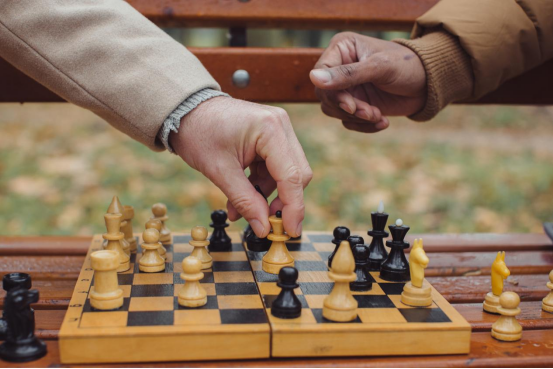
IV. The Contemporary Relevance and Preservation of Chess Culture
After millennia of evolution, Chinese chess has transcended its role as merely a game of strategy to become an important vehicle for carrying national culture and spirit; it continues to hold immense value for cultural transmission in the contemporary era.
At the educational level, Go and chess are essential components of holistic education, helping teenagers cultivate mental focus, stimulate their thinking, nurture their moral character, and develop rational thinking as well as a mindset to face wins and losses. At the cultural dissemination level, Go and Chinese chess serve as iconic symbols of Chinese culture, exported overseas and becoming important bridges for cultural exchange between China and other countries, allowing the world to experience the charm of traditional Chinese wisdom. In everyday life, these games have low entry barriers and appeal to people of all ages, making them an excellent way for everyone to engage in recreational intellectual activities and cultivate their mind and character, thereby enriching the spiritual and cultural life of the general public.
Today, various chess tournaments, chess clubs, and online chess platforms are flourishing; traditional chess arts, by integrating with modern communication methods, continue to regain new vitality. The state also attaches great importance to the preservation of traditional chess culture, incorporating it into the intangible cultural heritage inheritance system, thereby ensuring that the millennia-old tradition of chess can be passed down from generation to generation.
V. Summary
Chinese chess embodies the universe within a small square; it reveals heaven and earth through black and white pieces. It is not merely a competitive sport or form of entertainment, but rather a cultural system that encompasses wisdom, etiquette, moral values, and philosophical reflection. The millennia-long history of chess has witnessed the profound depth and continuity of Chinese civilization; a single game of chess carries the life wisdom and spiritual aspirations of the Chinese people. Preserving the culture of chess is to preserve a state of composed and steadfast mind, a wisdom of strategic planning, and a long-standing lineage of Chinese cultural heritage.