
 English
 French
 Spanish
 Russian
 Arabic
 Italy
Italy
Golmud
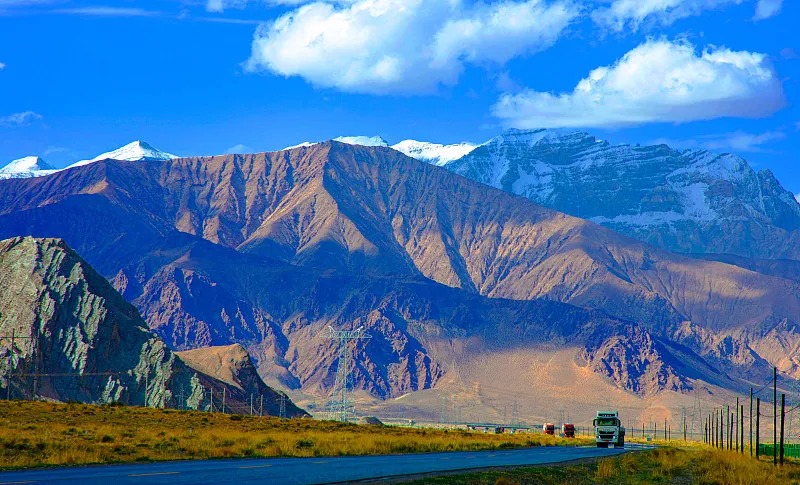
Qinghai Province, China · Golmud
“Salt-Lake Mysteries beneath Kunlun · Gateway of the Qinghai–Tibet Route”
Contents
I. City Overview
II. Geography & Ecology
III. History
IV. Top Attractions
V. Cultural Heritage
VI. Ethnic Culture & Folk Customs
VII. Local Cuisine
VIII. Crafts & Specialties
IX. Getting There
X. Best Season & Itineraries
XI. Economy
I. City Overview
Golmud sits in southern Haixi Mongol-Tibetan Autonomous Prefecture, Qinghai, in the south-central Qaidam Basin. It is the pivotal junction of the Qinghai–Tibet Railway and Highway—the 'throat' on the route into Tibet. Covering about 119,000 km² with a population around 220,000 (mainly Han, with Mongol, Tibetan, and Hui communities), it is guarded to the south by the Kunlun range and to the north by the Altyn Tagh. Within its bounds lie Qarhan, China's largest salt lake; the mysterious Hoh Xil (Kekexili) no-man's-land; and the Tuotuo River, the true source of the Yangtze—making it a vital transport and energy artery linking Qinghai, Tibet, and Xinjiang, and a gateway to the 'Third Pole.'
Quick Facts
Location | S Haixi, Qinghai; south-central Qaidam Basin |
Divisions | 5 subdistricts, 2 towns, 2 townships |
Area | ~119,000 km² |
Population | ~220,000 |
Ethnic groups | Han, Mongol, Tibetan, Hui |
Avg. elevation | ~2,800 m |
Climate | Alpine arid continental |
II. Geography & Ecology
Golmud's terrain is dominated by basin and high mountains. The Kunlun range forms its southern edge with snow peaks like Yuzhu and Yuxu; the north meets the Altyn Tagh and the Qaidam Basin, where gobi, desert, and salt lakes interlace. Qarhan is China's largest salt lake—mirror-like, with a hard salt crust over which the Qinghai–Tibet Highway and railway 'float' on a salt bridge. Hoh Xil to the southwest is part of the Yangtze headwaters, with glaciers, meadows, and Tibetan-antelope habitat; the Tuotuo River, the Yangtze's true source, rises in the Tanggula Mountains and flows east from here.
III. History
Golmud was a key node on the ancient Tang–Tibet road taken by Princess Wencheng on her journey into Tibet. In 1954 General Mu Shengzhong led the construction of the Qinghai–Tibet Highway and founded the new town by the Golmud River, turning a wilderness post into a highland stronghold. With the 2006 opening of the Qinghai–Tibet Railway, Golmud became the starting hub of the line into Tibet. Hoh Xil was established as a national nature reserve in the early 2000s and inscribed as 'Qinghai Hoh Xil' World Natural Heritage in 2017—one of China's largest world heritage sites.
IV. Top Attractions
Qarhan Salt Lake
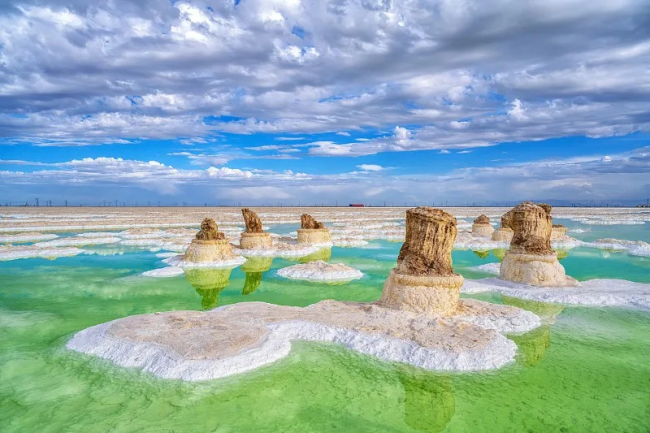
Qarhan Salt Lake
Qarhan is China's largest salt lake, about 5,800 km², rich in sodium chloride, potassium, and magnesium. Its hardened salt crust is so firm that the Qinghai–Tibet Highway and railway cross it on the world-famous '10,000-zhang Salt Bridge.' On clear days the brine is crystal clear and salt crystals gleam like snow against the blue sky—an otherworldly silver mirage where industry and nature meet.
Hoh Xil (Kekexili)
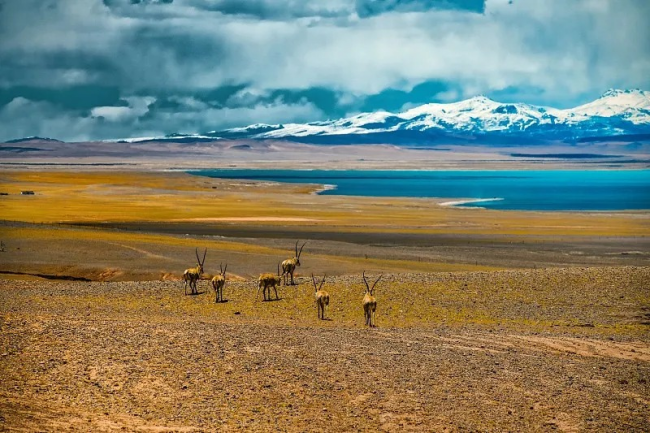
Hoh Xil (Kekexili)
Hoh Xil, southwest of Golmud, is one of the world's highest and most biodiverse no-man's-lands, inscribed as World Natural Heritage in 2017. Glaciers, meadows, and lakes host the Tibetan antelope, wild donkey, and wild yak. It preserves Earth's most pristine alpine wilderness—'the beautiful girl' in Mongolian—and stands as a banner of China's ecological protection.
Golmud Populus Euphratica Forest
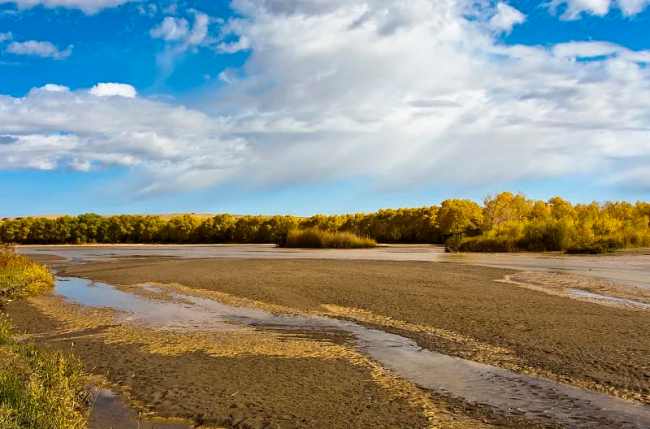
Golmud Populus Euphratica Forest
Golmud's Populus euphratica forest is a rare large desert riparian woodland on the plateau. The euphratica is said to live a thousand years, stand a thousand years after death—its golden leaves in autumn paint the gobi and riverbanks. Both an ecological windbreak and a photographer's secret, it embodies resilience on the stark highland.
Golmud City & General's Building
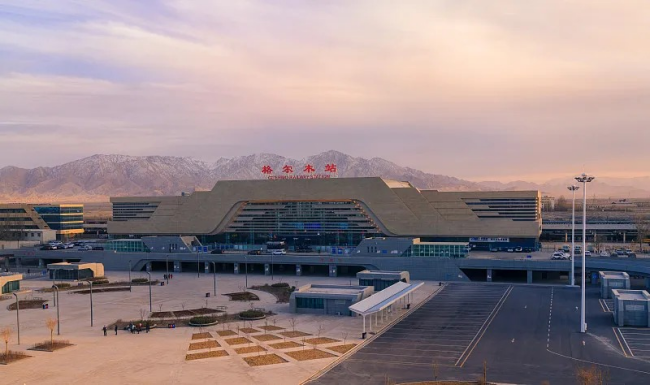
Golmud City & General's Building
Golmud's city center, built along the river, is a vibrant modern highland town. The General's Building Park centers on the former residence of General Mu Shengzhong, honoring the pioneers of the Qinghai–Tibet Highway and Railway; its museum recounts the epic of building the 'Sky Road.' From the building you overlook the gobi city and distant salt lakes—the best starting point to understand Golmud's shift from post to hub.
Tuotuo River (Yangtze Source)
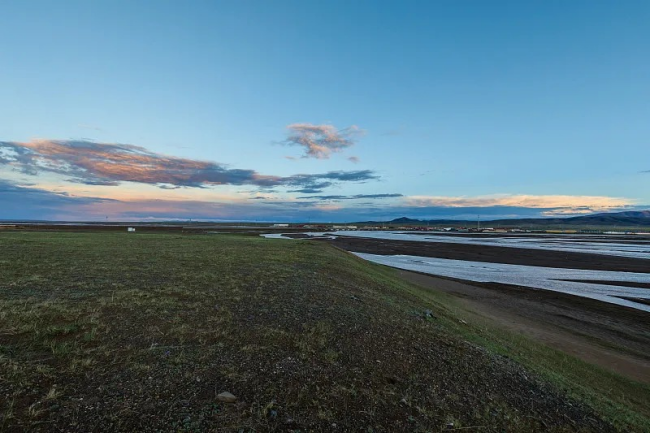
Tuotuo River (Yangtze Source)
The Tuotuo River is the true source of the Yangtze, born of meltwater from the Geladaindong glaciers of the Tanggula Mountains—from here the 6,300 km river begins. Its silver channels spread over alpine meadows beside the railway bridge. A key part of the Three-Rivers-Source region, it is the ultimate origin pilgrims and explorers seek of the 'Mother River.'
Kunlun Pass & Yuzhu Peak

Kunlun Pass & Yuzhu Peak
Kunlun Pass is the saddle where the highway crosses the range at about 4,767 m, with the Kunlun Spring and the Sonam Gyatso memorial stele, overlooking the pyramid summit of Yuzhu Peak (6,178 m). Revered in Chinese culture as the 'ancestor of all mountains,' the pass—with flapping prayer flags and rolling clouds—is a solemn place to feel Kunlun's grandeur and highland faith.
V. Cultural Heritage
Golmud's heritage blends three threads—the ancient road, the salt road, and highland ecology. The Tang–Tibet road and the Qinghai–Tibet Highway chronicle the Chinese nation's feat of linking the snow land; Mongol and Tibetan nomadic traditions, mani stones, and wind-horse prayers endure; and Hoh Xil World Heritage preserves Earth's alpine wilderness under the strictest protection. The General's Building and railway museum freeze the 'Two Roads Spirit' into the city's memory.
VI. Ethnic Culture & Folk Customs
Golmud is home to Han, Mongol, Tibetan, and Hui peoples together. The Mongolian Nadam (horse racing, archery), Tibetan Shoton and circumambulation rites, and Han festivals interweave. Mosques, Tibetan monasteries, and yurt restaurants coexist; at festivals hand-meat, milk tea, and guozhuang dances gather—showing the inclusive energy of a highland hub.
VII. Local Cuisine
Dish | Description |
Hand-Grabbed Mutton | Highland mutton boiled plain and eaten with salt or garlic—a shared Hospitality dish of Mongol, Tibetan, and Han. |
Air-Dried (Yak) Beef | Naturally air-dried highland yak beef—firm, chewy, the classic 'Sky Road' trail food. |
Qinghai Liangpi | Chewy wheat sheets with chili oil, vinegar, and sesame paste—a tangy, spicy Northwest street favorite. |
Yak Yogurt | Naturally fermented highland yak milk—thick, tart, often sweetened with sugar or paired with barley. |
Clay-Stove Mutton | Mutton braised with potato, vermicelli, and pepper—aromatic and hearty, a gobi-town comfort dish. |
VIII. Crafts & Specialties
Golmud's crafts blend the gifts of salt lake and steppe. Qarhan salt carvings sculpt snow mountains and animals from natural salt crystals—crystal clear; Mongolian silverware, horse gear, Tibetan carpets, and thangkas show nomadic and Buddhist artistry. With abundant potash, lithium, and wind-solar energy, salt-chemical and clean-energy products are emerging 'industrial specialties.'
IX. Getting There
Transport: Golmud Airport links to Xining, Xi'an, Chengdu, and beyond; the Qinghai–Tibet Railway starts here for Tibet, and the G109 and G215 highways form the land backbone. It is about half a day by train or car from Xining, then by road to Kunlun Pass, Qarhan, and Hoh Xil. Permits and acclimatization time are needed for Tibet and the reserve.
X. Best Season & Itineraries
Best time to visit: Best season is May to October. Summer is cool and ideal for salt lakes and the city; September–October paints the poplars gold. Winter is severe with some high roads closed, yet offers Kunlun snowscapes. For Hoh Xil and other high areas, guard against cold and altitude sickness.
Recommended itineraries:
· Salt-Lake Industry Day: Golmud city — Qarhan (Salt Bridge) — General's Building Park.
· Kunlun Eco 2-Day: Kunlun Pass — Yuzhu Peak view — Tuotuo River source.
· Hoh Xil Mystery 3-Day: Golmud — Sonam Gyatso Station — reserve edge — return.
XI. Economy
Golmud is Qinghai's 'resource and hub' city: Qinghai–Tibet logistics converge here, and it is a national base for potash (Qarhan), lithium, and clean energy, with vast gobi solar and wind arrays. Riding on Hoh Xil, Kunlun, and the world's salt lakes, eco- and study tourism is rising fast—moving from 'Tibet gateway' toward a modern highland node city.