
 English
 French
 Spanish
 Russian
 Arabic
 Italy
Italy
Shannan
Tibet Autonomous Region, China · Shannan
“Cradle of Tibet · Ancient Capital of Tubo”
Contents
I. City Overview
II. Geography & Ecology
III. History
IV. Top Attractions
V. Cultural Heritage
VI. Ethnic Culture & Folk Customs
VII. Local Cuisine
VIII. Crafts & Specialties
IX. Getting There
X. Best Season & Itineraries
XI. Economy
I. City Overview
Shannan lies in southern Tibet along the middle Yarlung Tsangpo, bordering India and Bhutan to the south. It is the cradle of Tibetan civilization—the 'source of Tibet' and 'cradle of Tibetan history and culture.' Covering about 79,000 km² with a population near 350,000, it is mainly Tibetan with Monpa and Lhoba communities. Here rose Tibet's first palace (Yumbulagang), first chapel (Tradruk), first monastery (Samye), and the tombs of Tubo kings. The Yarlung Valley nurtured the earliest farming and civilization on the plateau; in historical weight and sacred sites, none rivals it in Tibet.
Quick Facts
Location | S Tibet, middle Yarlung Tsangpo, borders India & Bhutan |
Divisions | 1 district (Nêdong), 11 counties |
Area | ~79,000 km² |
Population | ~350,000 |
Ethnic groups | Tibetan, Han, Monpa, Lhoba |
Avg. elevation | ~3,700 m |
Climate | Alpine temperate semi-arid |
II. Geography & Ecology
Shannan slopes from higher north to lower south: the north is the Yarlung Tsangpo valley and plateau lake basins, transitioning south to Himalayan high mountains and subtropical edges. The Yarlung River, Yamdrok, and Puma Yumco waters dot the land; the valley climate is mild and the soil fertile, making it a major farming region of Tibet. The southern Le'bugou, fed by Indian-Ocean moisture, is verdant and misty, a sharp contrast to the northern wilderness—a vertical 'four seasons on one mountain' ecological scroll.
III. History
Shannan is the origin point of Tibetan history. Tradition holds that in the 2nd century BCE, Nyatri Tsenpo unified the Yarlung tribes and founded Tibet's first dynasty—the Tubo (Yarlung) Kingdom—with its capital at Chongye. In the 7th century Songtsen Gampo moved from Shannan to Lhasa and unified the plateau, opening Tibet's golden age. Yumbulagang, Tradruk, and Samye witnessed the advent of Buddhism and the transformation of indigenous civilization; the tombs of successive kings rest at Chongye—the 'Valley of the Kings,' the largest and best-preserved royal tomb site in Tibet.
IV. Top Attractions
Yumbulagang Palace
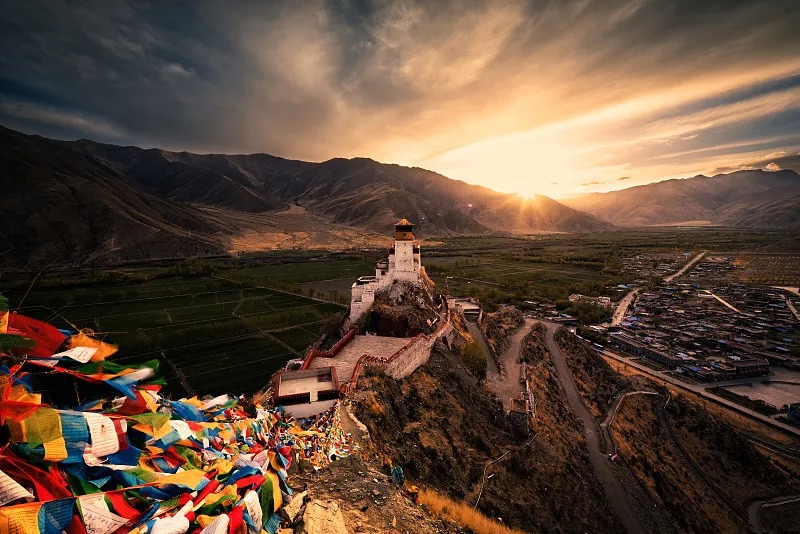
Yumbulagang Palace
Yumbulagang stands on Zhaxiri Mountain in Nêdong—Tibet's first palace, said to be built for Nyatri Tsenpo in the 2nd century BCE and later a summer palace of Songtsen Gampo and Princess Wencheng. Its vermilion castle hangs alone atop the peak, overlooking the Yarlung Valley, majestic. Murals tell the Tubo genesis—the oldest physical witness to the 'source of Tibet.'
Samye Monastery
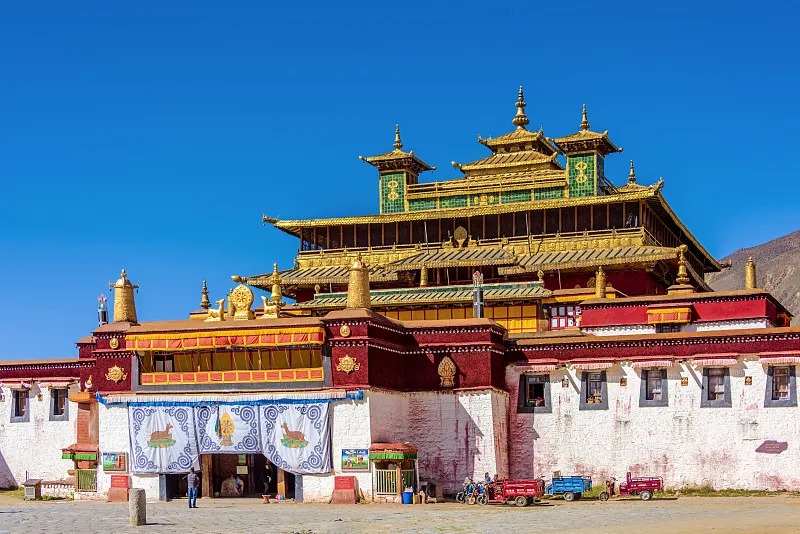
Samye Monastery
Founded in the 8th century by Shantarakshita, Padmasambhava, and Trisong Detsen, Samye is Tibet's first monastery with the full triad of Buddha, Dharma, and Sangha—the 'ancestor of Tibetan monasteries.' Its layout mirrors Mount Meru: the central Utse hall is Meru, the corner stupas the continents, and the round wall the iron mountain. Murals and architecture fuse Indian, Han, and Tibetan styles—a milestone of Buddhism taking root on the snow land.
Yamdrok Lake
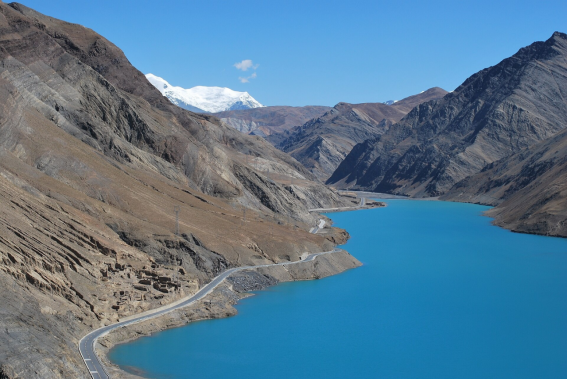
Yamdrok Lake
Yamdrok Lake, or 'Yamdrok,' is one of Tibet's three holy lakes, its coral-like branches scattered among the mountains. Its waters shift from deep blue to jade with the light—'a fairyland above, Yamdrok below.' Rich lakeshore meadows graze cattle and sheep; the lake holds高原裸鲤 (highland naked carp). From the Kamba La pass the bays unfold like blue silk—Shannan's most famous landmark.
Tradruk Temple
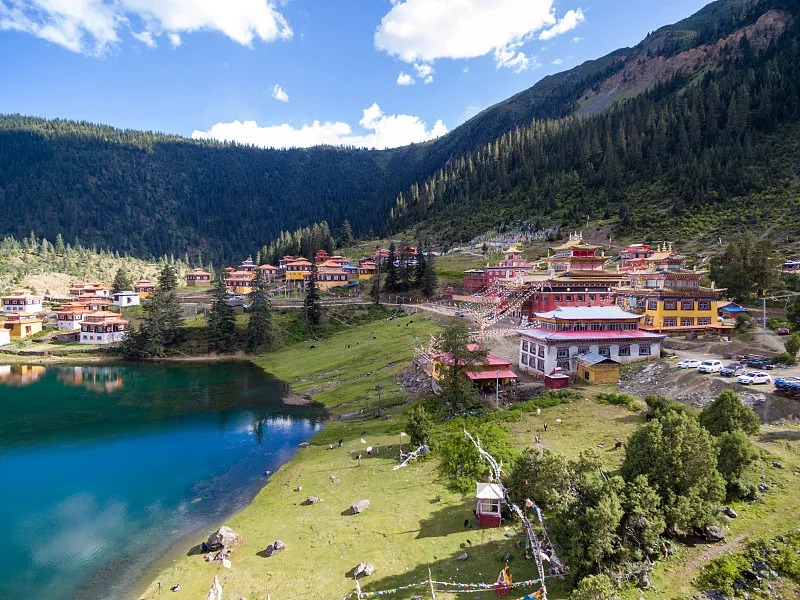
Tradruk Temple
Tradruk Temple in Nêdong was the first chapel built under Songtsen Gampo, facing Yumbulagang and highly significant in Tibetan Buddhist history. It treasures a 'Pearl Thangka'—an image of the resting Avalokiteśvara made of tens of thousands of pearls and gems, a rare and peerless craft. Tradruk is an indispensable link in the 'source of Tibet' faith sequence.
Tombs of Tibetan Kings (Valley of the Kings)
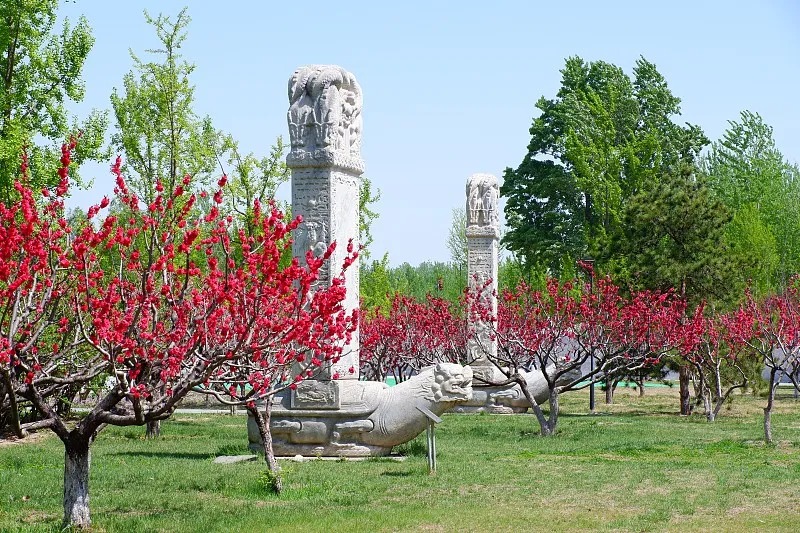
Tombs of Tibetan Kings (Valley of the Kings)
The royal tomb cluster in Chongye holds the mausoleums of successive Tubo kings (tsenpos), with about a dozen extant tombs on terraces along the Yarlung River, their earthen mounds rising like hills. Here rest Songtsen Gampo, Trisong Detsen, and other great rulers—the largest and best-preserved royal tomb site in Tibet, a Major Historical and Cultural Site, hailed as the 'Pyramids of Tubo.'
Mindrolling Monastery
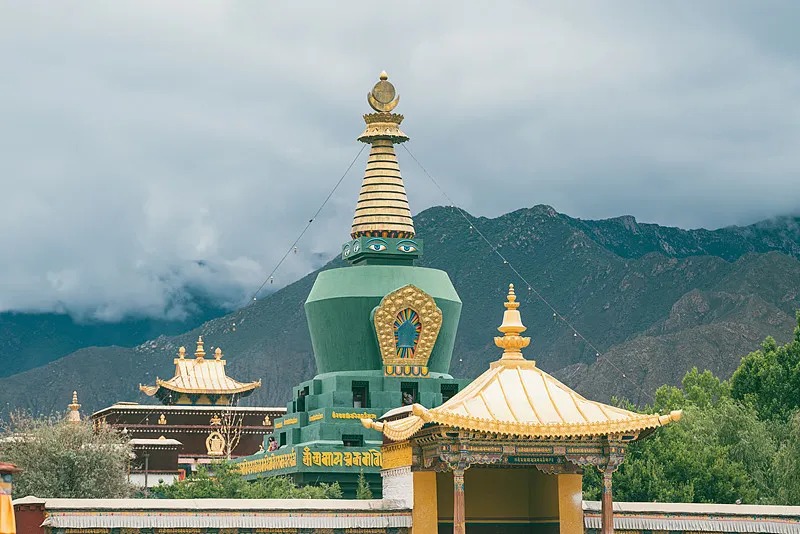
Mindrolling Monastery
Mindrolling Monastery in Dranang is a key Nyingma (Red) school seat, founded in the 10th century, famed for rigorous exoteric-esoteric study and traditions of astrology, calligraphy, and chant. Called a 'Tibetan cultural academy,' its solemn halls and fine murals once nurtured calligraphers and astrologers, deeply influencing Buddhist culture and local education.
V. Cultural Heritage
Shannan is rich in historical relics. The Yarlung scenic area, Samye, Tradruk, and the royal tombs are all Major Historical and Cultural Sites; Yumbulagang and Mindrolling link the complete thread of 'source of Tibet' civilization. Folk arts like 'Shannan folk songs,' 'Jiuhe Cham,' and 'Zêtang Gar' are listed as intangible heritage; Tibetan calligraphy, astrology, and chant traditions pass on in the monasteries.
VI. Ethnic Culture & Folk Customs
Shannan is mainly Tibetan, with ancient Monpa and Lhoba communities on its southern edge. Yarlung people sing and dance with gusto; 'Gorshey' and 'Sheychen' ring out at festivals; the Ongkor field-circling and mountain-lake circumambulations express reverence for the land. Monpa and Lhoba weaving and myths add colorful frontier flavor to this 'source of Tibet' land.
VII. Local Cuisine
Dish | Description |
Tsampa & Butter Tea | Yarlung highland barley roasted and milled, eaten with butter tea—the oldest staple combo of the 'source of Tibet.' |
Penbe (Pea Jelly) | A pea-flour jelly specialty of Shannan and Shigatse—sour, spicy, and refreshing, common on the streets. |
Tibetan Blood Sausage & Lung | Fresh meat, blood, and tsampa stuffed and boiled, or rice-stuffed lung steamed—traditional feast flavors. |
Air-Dried Meat | Highland yak meat air-dried—savory and chewy, essential for winter and travel in farming-pastoral areas. |
Yogurt & Dried Curd | Yak-milk yogurt is rich and tangy; dried curd is portable—common highland dairy products. |
VIII. Crafts & Specialties
Shannan's crafts inherit the 'source of Tibet' lineage. Dranang's pulu (Tibetan woolen cloth) and pangden (aprons) are finely woven; Mindrolling's incense, paper, and astrological texts are renowned; Zêtang's wooden bowls, silverware, and thangka painting have long traditions. The area yields highland barley, rapeseed, walnut, and Tibetan medicine; Dranang pulu and Gonggar thangka are distinctive souvenirs.
IX. Getting There
Transport: Shannan is only about 150 km from Lhasa; Lhasa Gonggar Airport lies within Shannan. The Lhasa–Nyingchi and Lhasa–Shigatse railways and several national highways converge here, reaching Tsedang (Nêdong) from Lhasa in about 2 hours by train or road. Scenic roads are in good condition for self-drive and short trips; a border permit is needed for the southern Le'bugou.
X. Best Season & Itineraries
Best time to visit: The best season is April to October. May–September brings lush, pleasant Yarlung valleys—the golden period for ancient sites and holy lakes; June–August blossoms across the grasslands. Winter is cold but snow makes the sacred sites more solemn and serene.
Recommended itineraries:
· Source-of-Tibet 2-Day: Yumbulagang — Tradruk — Valley of the Kings (Chongye) — Tsedang.
· Holy Lake & Temple 2-Day: Samye — Mindrolling — Yamdrok (Kamba La pass).
· Yarlung Valley 3-Day: Tsedang — Yumbulagang — Yarlung scenery — Le'bugou (border).
XI. Economy
Shannan's economy rests on highland specialty agriculture, clean energy, mining, and cultural tourism. The Yarlung Valley is a granary of Tibet with substantial barley, wheat, and rapeseed; hydropower, solar, and geothermal resources are abundant, with Zam and Gyaca stations built. Riding on top-tier heritage like Yumbulagang, Samye, and Yamdrok, cultural tourism is rising fast. In 2023 GDP was about 25 billion yuan, building a model zone of a beautiful, happy Tibet.