
 English
 French
 Spanish
 Russian
 Arabic
 Italy
Italy
Nyingchi
Tibet Autonomous Region, China · Nyingchi
“Jiangnan of the Snow Land · Canyon Secret”
Contents
I. City Overview
II. Geography & Ecology
III. History
IV. Top Attractions
V. Cultural Heritage
VI. Ethnic Culture & Folk Customs
VII. Local Cuisine
VIII. Crafts & Specialties
IX. Getting There
X. Best Season & Itineraries
XI. Economy
I. City Overview
Nyingchi lies in southeastern Tibet along the middle and lower Yarlung Tsangpo, where the Nyenchen Tanglha and eastern Himalayas meet. With an average elevation of only about 3,100 m, it is Tibet's lowest and most humid region, known as the 'Jiangnan (south-of-the-Yangtze) of the Snow Land' or 'Switzerland of Tibet.' Covering about 114,000 km² with a population around 230,000, it is home to Tibetans, Han, Monpa, Lhoba, and Deng peoples. Here snow peaks mirror peach blossoms, forests and canyons coexist, Namcha Barwa pierces the clouds, and the Yarlung Tsangpo Grand Canyon plunges below—an ultimate sample of mountain ecology and vertical landscapes.
Quick Facts
Location | SE Tibet, middle-lower Yarlung Tsangpo |
Divisions | 1 district (Bayi), 6 counties |
Area | ~114,000 km² |
Population | ~230,000 |
Ethnic groups | Tibetan, Han, Monpa, Lhoba, Deng |
Avg. elevation | ~3,100 m |
Climate | Alpine temperate humid / semi-humid |
II. Geography & Ecology
Nyingchi's terrain varies dramatically with elevation—valleys of a few hundred meters and snow peaks above 7,000 m share the same frame. The Yarlung Tsangpo makes a unique horseshoe bend here, carving the world's largest canyon; Namcha Barwa (7,782 m) and Gyala Peri face each other across the river. Forest coverage exceeds 47%, with a complete vegetation spectrum from tropical to cold zones—Tibet's 'natural oxygen bar' and a biodiversity treasury. The Yarlung Tsangpo Grand Canyon reserve shelters the Bengal tiger, snow leopard, and yew, among other rare species.
III. History
Nyingchi was anciently called 'Kongpo,' the homeland of the Kongpo tribe of the Tubo era with deep Bon remnants. As the gateway of southeastern Tibet, the Monpa, Lhoba, and Deng peoples have lived for generations in its gorges and forests, retaining unique slash-and-burn livelihoods and totemic beliefs. With the Sichuan–Tibet Highway and Lhasa–Nyingchi railway, Kongpo has changed from a 'hidden land' into a hub linking the interior and the border, and its culture is being renewed through tourism.
IV. Top Attractions
Namcha Barwa
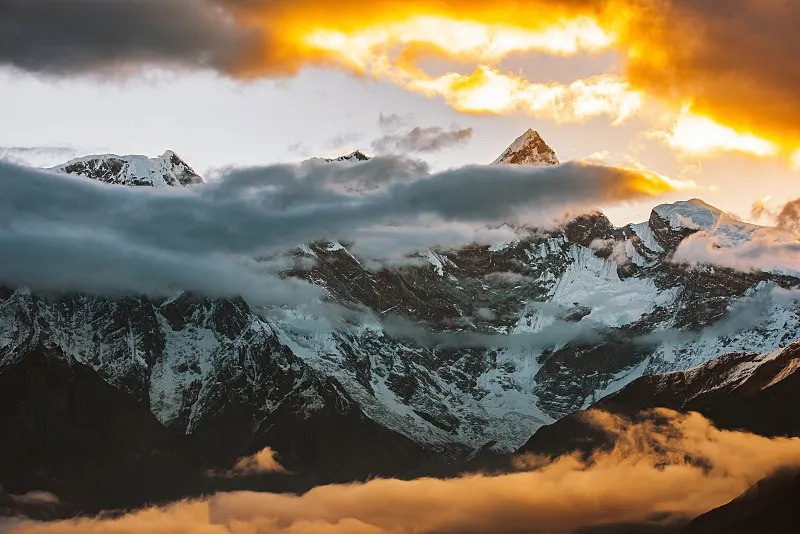
Namcha Barwa
Namcha Barwa rises 7,782 m as the highest peak at the eastern end of the Himalayas; its name means 'spear piercing the sky.' Voted 'China's most beautiful mountain' by Chinese National Geography, it is often veiled in cloud and called the 'Shy Maiden Peak.' Against the great Yarlung Tsangpo bend, its golden summit at dusk is supremely magnificent—a photographer's ultimate frame.
Yarlung Tsangpo Grand Canyon
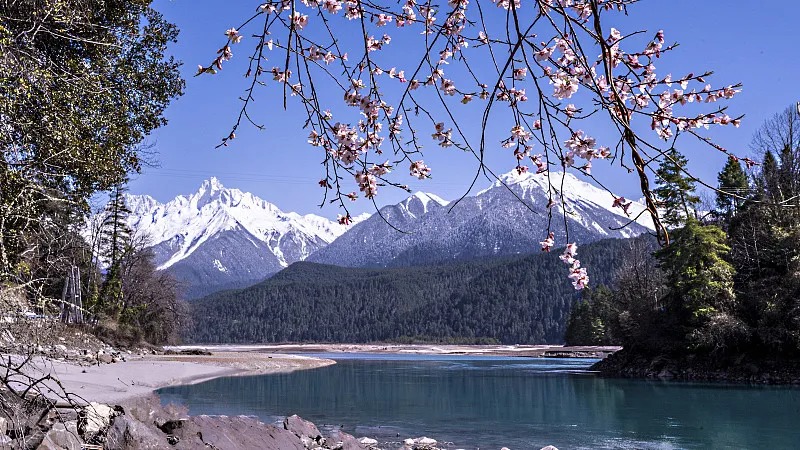
Yarlung Tsangpo Grand Canyon
The Yarlung Tsangpo Grand Canyon runs about 504 km with a maximum depth of 6,009 m—the world's largest canyon. At Mainling the river makes a near-180° horseshoe bend; its roar shakes the gorge and the cliffs stand like blades. Vegetation ranges vertically from subtropical to alpine—peach blossoms, spruce, and glaciers in one frame—a holy land for exploration, science, and eco-tourism.
Basum Lake (Basong Tso)
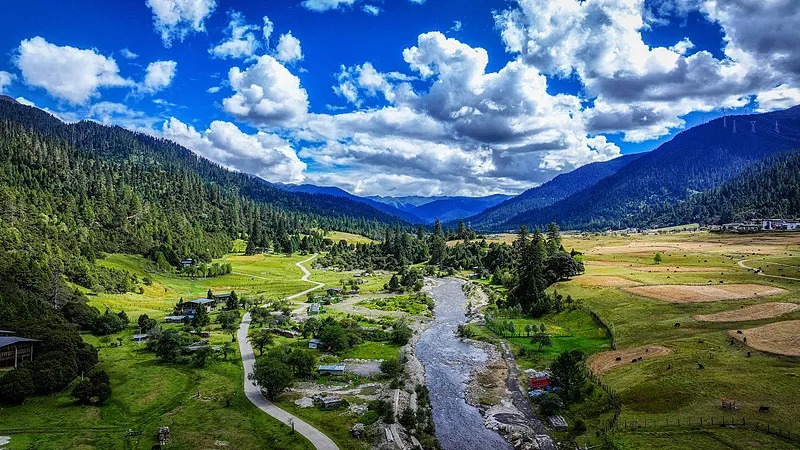
Basum Lake (Basong Tso)
Basum Lake (Cuogao Lake) in Gongbo'gyamda County was Tibet's first natural 5A scenic area. Its jade-blue water is embraced by snow mountains, and the 1,500-year-old Tsozong Gongba Temple sits on the island of Tashi. Primeval forest, a lakeside pilgrimage path, and Tibetan villages make it beautiful in every season—'a fairy pool on earth.'
Lulang Forest Sea
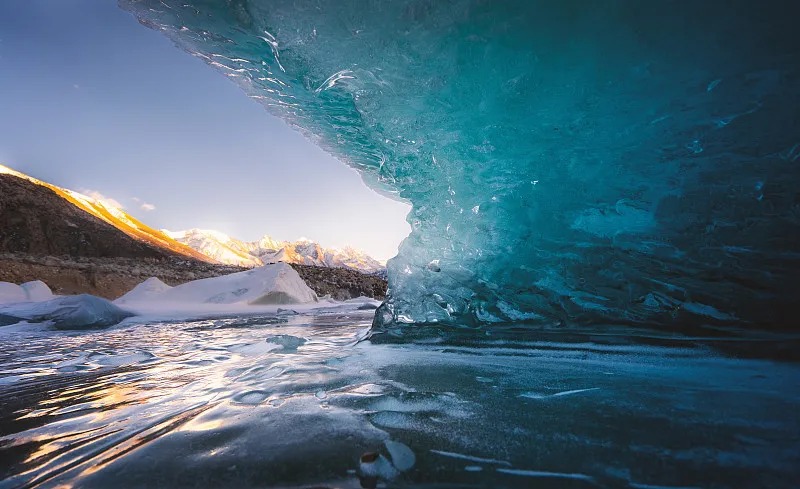
Lulang Forest Sea
Lulang Forest Sea in Lulang Town, Bayi District (~3,700 m), is a vast 'forest sea and meadow' of spruce, fir, and alpine grassland. In summer green waves roll and wildflowers carpet the ground, with snow ranges beyond; wooden fences, Tibetan hamlets, and streams dot the scene like Switzerland. The famous Lulang stone-pot chicken also draws many travelers.
Midui Glacier
Midui Glacier
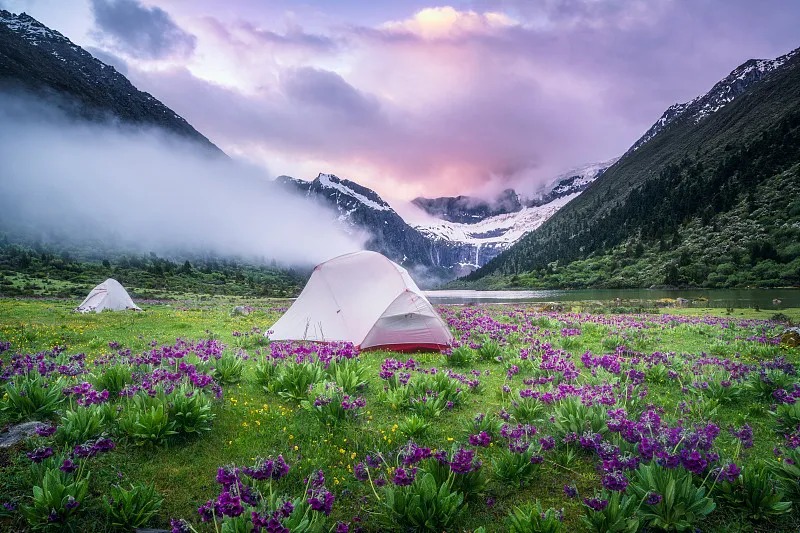
Midui Glacier in Bomi County is a rare 'maritime glacier' in Tibet, notable for its low elevation (terminus about 2,400 m) and easy access, once voted 'China's most beautiful glacier.' Its icefall cascades from the snow peak, contrasting wonderfully with conifer forest, villages, and rape-flower fields—a marvel where glacier meets farmland.
Nanyi Valley
Nanyi Valley
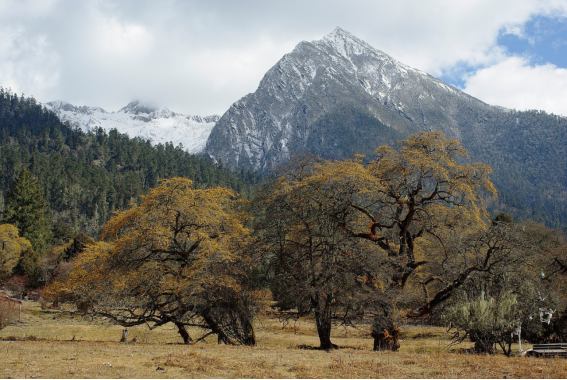
Nanyi Valley in Nanyi Lhoba Township, Mainling County, is a 'hidden gorge' on the northern Himalaya slope, hailed as the 'Medicine-King Valley of Tibet.' Primeval forest shades the sky; waterfalls, meadows, snow peaks, and Lhoba villages intertwine in a humid, oxygen-rich climate. It is ideal for experiencing Lhoba culture and highland forest wellness.
V. Cultural Heritage
Nyingchi preserves a unique Kongpo culture and Bon heritage. The ancient 'Kongpo loud-arrow' archery is a living fossil of Tibetan archery culture; 'Deng clothing' and 'Lhoba clothing' record the aesthetics and history of gorge peoples as intangible heritage. Sacred sites like Bonri Mountain and Segyu Gönchen Monastery witness the ancient blend of indigenous belief and Buddhism in southeastern Tibet.
VI. Ethnic Culture & Folk Customs
Nyingchi is a big family of peoples—Tibetans are the majority, with the ancient Monpa, Lhoba, and Deng. The Lhoba and Monpa are gifted singers and dancers with distinctive weaving, bamboo craft, and sword dances; the Deng keep a unique language and dress. At the Kongpo New Year, Ongkor, and mountain-lake circumambulations, villages below the snow peaks revel in a joyous coexistence with nature.
VII. Local Cuisine
Dish | Description |
Lulang Stone-Pot Chicken | Free-range chicken slow-cooked in a Medog stone pot with herbs like hand-shaped ginseng and matsutake—tender, savory soup, Nyingchi's signature. |
Matsutake & Wild Mushrooms | Nyingchi forests yield matsutake and morels; braised in soup or lightly stir-fried, they are exquisitely fragrant. |
Kongpo Cured Pork | Highland pork cured and air-dried with salt and pepper—smoky and rich, a traditional winter store in SE Tibet. |
Tibetan Fragrant Pig | Free-range forest pigs with firm, non-greasy meat and a unique flavor—grilled or stir-fried. |
Butter Tea & Tsampa | The staple highland energy combo—savory and warming, the most practical provision before a canyon trek. |
VIII. Crafts & Specialties
Nyingchi's products blend forest and snow-land spirit. Medog stone pots are hand-carved from soapstone—even heating and healthy; Monpa and Lhoba bamboo ware, wooden bowls, and rattan weaving are delicate and practical. Tibetan incense, Tibetan medicine, wild mushrooms, and walnut oil are popular. 'Nyingchi apples' and 'Zayü kiwi' are famed for sweetness—the plateau's sweet gift to distant guests.
IX. Getting There
Transport: Nyingchi Mainling Airport connects to Chengdu, Chongqing, and Lhasa—one of Tibet's lowest large airports. The Lhasa–Nyingchi railway (part of the Sichuan–Tibet line) is open, reaching Nyingchi from Lhasa in about 3.5 hours. National Highway 318 and other roads link the scenic spots; self-drive and chartered tours are convenient, but some mountain roads are sharp—drive with care.
X. Best Season & Itineraries
Best time to visit: The best seasons are March–May and September–November. Late March to April brings peach blossoms blanketing the hills against snow peaks—most stunning; September–November offers crisp air and blazing autumn colors. June–August is the rainy season, lushest but showery; winter is quiet with serene snowscapes.
Recommended itineraries:
· Peach-Blossom 3-Day: Nyingchi — Galatso Peach Village — Bomi Peach Valley — Rawok Lake.
· Canyon & Snow 4-Day: Yarlung Tsangpo Grand Canyon — Namcha Barwa Viewpoint — Lulang Forest — Basum Lake.
· Glacier Secret 3-Day: Midui Glacier — Bomi — Nanyi Valley — Sejila Pass.
XI. Economy
Nyingchi's economy rests on specialty fruit, Tibetan medicine, eco-tourism, and hydropower. It is a key base for grain, oil, tea, and fruit in Tibet, with fine tea, apples, and Sichuan pepper. Yarlung Tsangpo hydropower potential is enormous. Riding on top-tier ecology, year-round tourism booms—peach-blossom festivals, trekking, and self-drive tours are favorites. In 2023 GDP was about 23 billion yuan, building an ecological-civilization model and a key ecological barrier for Tibet.