
 English
 French
 Spanish
 Russian
 Arabic
 Italy
Italy
Shigatse
Tibet Autonomous Region, China · Shigatse
“Holy Land of Tsang · At the Roof of the World”
Contents
I. City Overview
II. Geography & Ecology
III. History
IV. Top Attractions
V. Cultural Heritage
VI. Ethnic Culture & Folk Customs
VII. Local Cuisine
VIII. Crafts & Specialties
IX. Getting There
X. Best Season & Itineraries
XI. Economy
I. City Overview
Shigatse lies in southwestern Tibet, on the northern foot of the Himalayas. It borders Nepal, India, and Bhutan to the south with a 1,753 km frontier, making it a key gateway of Tibet to South Asia. Covering about 182,000 km² with a population of roughly 800,000, it is mainly Tibetan with Han and Hui communities. As the center of 'Tsang' (western Tibet), it is the seat of the Panchen Lamas and is famed as the 'land of song and dance.' From Mount Everest—the world's highest peak—to the ancient Sakya Monastery and the solemn Tashilhunpo, Shigatse blends snow mountains, glaciers, river valleys, fortresses, and rich Tibetan Buddhist culture into one unforgettable destination.
Quick Facts
Location | SW Tibet, north of Himalayas, at junction with 3 countries |
Divisions | 1 district (Samzhubze), 17 counties |
Area | ~182,000 km² |
Population | ~800,000 |
Ethnic groups | Tibetan, Han, Hui |
Avg. elevation | ~4,000 m |
Climate | Alpine temperate semi-arid |
II. Geography & Ecology
Shigatse's terrain is majestic and dramatic—endless mountain ranges and crisscrossing river valleys. The Himalayas form its southern edge and host Mount Everest (8,848.86 m), the world's highest peak, along with dozens of summits above 7,000 m such as Cho Oyu and Shishapangma. The Yarlung Tsangpo and Nyang Chu rivers nourish valley oases and alpine meadows. Southern gorges are deep with snowy reflections; the northern plateau is vast with scattered lakes. Sunshine is abundant, day-night temperature swings are large, and wet/dry seasons are distinct—a classic highland mountain climate.
III. History
Shigatse is the political, religious, and cultural core of 'Tsang' (western Tibet) with a profound history. In the 13th century the Sakya dynasty rose here; Sakya Monastery became the Yuan-dynasty religious-political center of Tibet, a pivotal place in the unification of the region. In the early Ming, Gendun Drub—a disciple of Tsongkhapa—founded Tashilhunpo, later the seat of the Panchen Lamas. In 1904 the people of Gyantse bravely resisted the British invasion, leaving the heroic memory of the 'Gyantse Dzong.' Shigatse is thus both a Gelugpa stronghold and a testament to the Chinese nation's defense of its territory.
IV. Top Attractions
Mount Everest
Mount Everest
At 8,848.86 m, Mount Everest is the world's highest peak, straddling the Shigatse–Nepal border. Tibetans revere it as 'Qomolangma,' the mother-goddess of the earth. Viewed from the Rongbuk area on the north side, its pyramid summit is snow-capped year-round with fluttering banner clouds—a breathtaking sight. Around it lie the Rongbuk Glacier and Rongbuk Monastery. Everest is the ultimate coordinate for climbers and pilgrims alike, a symbol of the natural and spiritual sanctity of the 'Third Pole.'
Tashilhunpo Monastery
Tashilhunpo Monastery
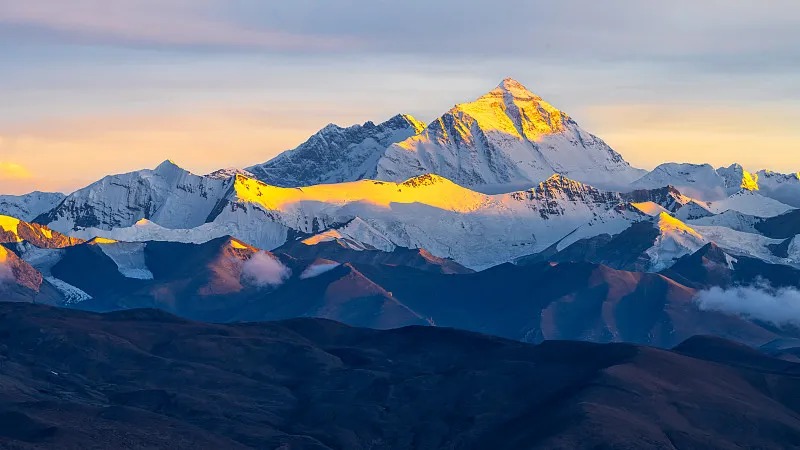
Tashilhunpo Monastery sits in Samzhubze District, founded in 1447 by Gendun Drub, a disciple of Tsongkhapa. It is the largest Gelugpa monastery in Tsang and the seat of the Panchen Lamas. Built into the hillside with towering halls, its Maitreya Chapel houses a 26.2 m gilded bronze Maitreya—the world's tallest bronze seated Buddha. Murals, stupas, and the sound of debate make it a living treasury of Tibetan Buddhist art.
Everest Base Camp
Everest Base Camp
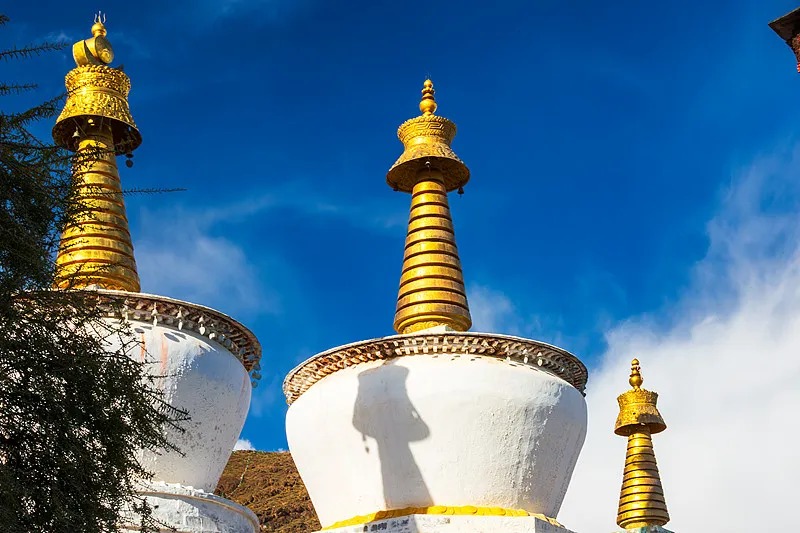
The (north) Everest Base Camp lies at about 5,200 m below Rongbuk Monastery—the closest viewpoint ordinary visitors can reach. Prayer flags snap in the wind and mani piles stand layer upon layer; at night the Milky Way drapes over the snowy summit, a holy place for photography and stargazing. Looking up from here, the distance to the great peak becomes viscerally close, humbling one before nature's power.
Karola Glacier
Karola Glacier
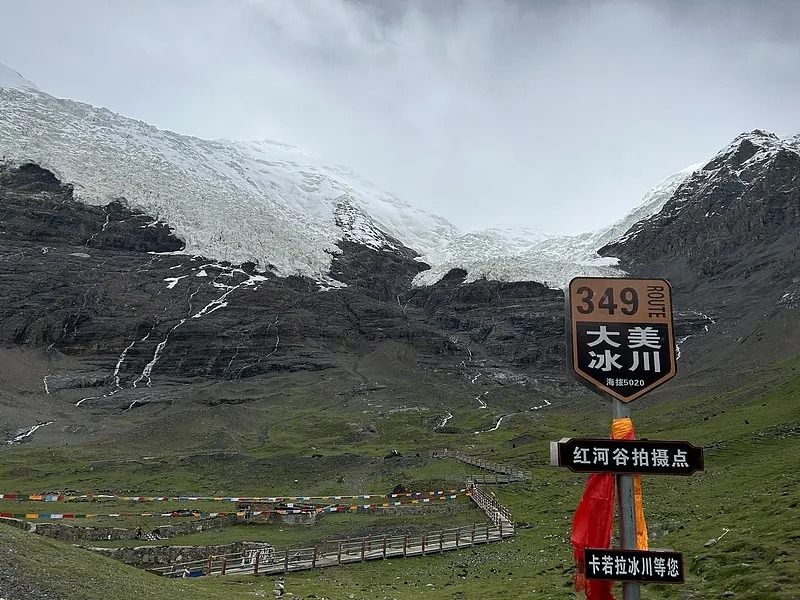
Karola Glacier lies at the junction of Nagarzê and Gyantse counties, on the southern slope of Noijin Kangsang (7,191 m) in the Nyenchen Tanglha range. Its tongue descends from the peak and hangs above the roadside cliff—crystal clear and chilling. It is one of Tibet's most accessible modern glaciers, its vast icefall and blue-white seracs shimmering dreamlike in sunlight; the film 'Red River Valley' was shot here.
Sakya Monastery
Sakya Monastery
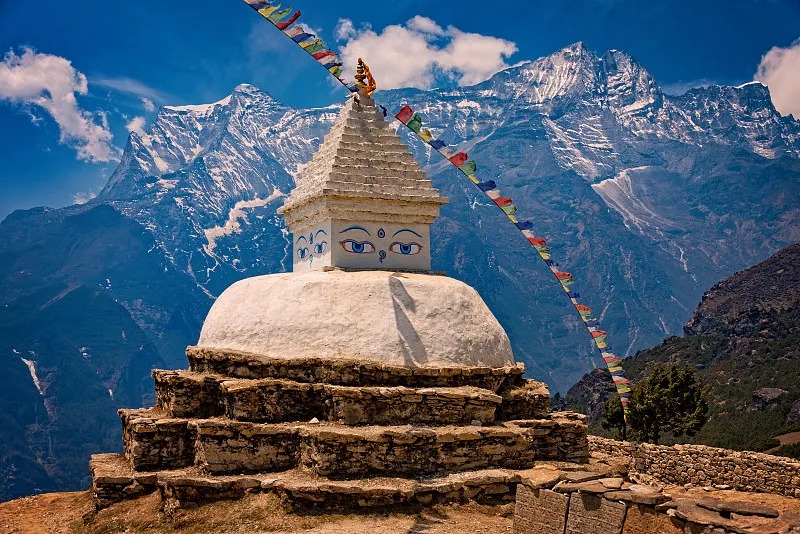
Sakya Monastery in Sakya County is the founding seat of the Sakya school of Tibetan Buddhism, called 'the Second Dunhuang.' Divided into the hilltop North Monastery and the plain South Monastery, its grey rammed-earth walls with red stripes form the distinctive 'Sakya color.' It holds tens of thousands of palm-leaf sutras, Yuan–Ming murals, statues, and ritual objects—a crystallisation of Tibet's Yuan-era theocratic history and art, listed as a Major Historical and Cultural Site in 1961.
Palkhor Monastery, Gyantse
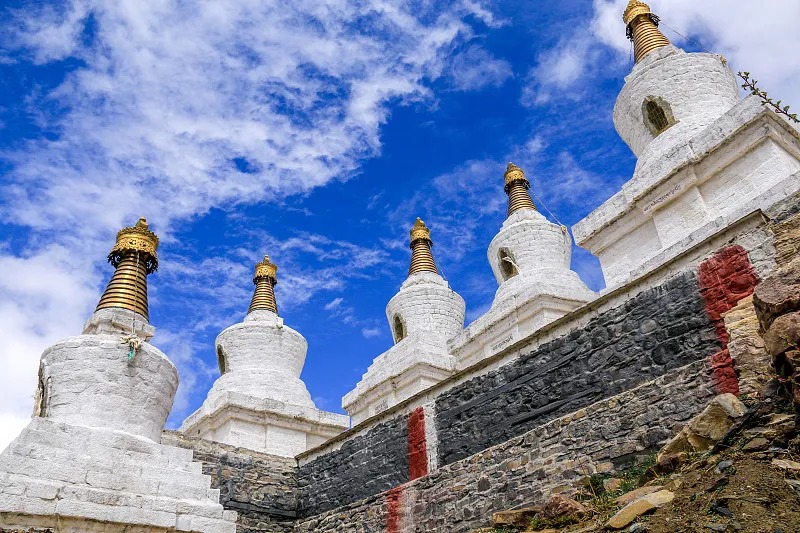
Palkhor Monastery, Gyantse
Palkhor Monastery in Gyantse was founded in 1418 and is unique for hosting the Kadam, Gelug, and Sakya traditions together. Its Kumbum ('Ten-Thousand-Buddha') stupa rises nine stories with 77 chapels and 100,000 statues—the 'Stupa King of Tibet.' The Gyantse Dzong fortress nearby was the site of the 1904 anti-invasion defense, still commanding respect, together with Palkhor forming the historic landmarks of Gyantse, the 'Heroic Town.'
V. Cultural Heritage
Shigatse's cultural heritage shines like stars. Both Tashilhunpo and Sakya Monasteries are Major Historical and Cultural Sites; Gyantse's 'Ten-Thousand-Buddha' stupa unites architecture, sculpture, and painting at the pinnacle of Tibetan art. The 'Guoze' (Shigatse tap dance) is brisk and rhythmic, listed as national intangible heritage, while Tibetan opera, thangka painting, and butter-sculpture crafts are passed on here. Sakya's Yuan-era archives and classics are precious material evidence of Tibet's integration into China.
VI. Ethnic Culture & Folk Customs
Shigatse is rich in Tibetan culture—Tibetans make up the vast majority, living harmoniously with Han and Hui. The Tsang dialect, the 'Namling' school of Tibetan opera, and the stately 'Sheychen' song-dance carry the collective memory of highland people. During festivals, Shoton, Ongkor, thangka-unveiling, and butter-lamp ceremonies take turns; prayer flags, mani stones, and wind horses flutter everywhere, and Buddhist faith permeates daily life.
VII. Local Cuisine
Dish | Description |
Penbe (Shigatse Pea Jelly) | A local snack of cooled pea-flour jelly with chili and vinegar—refreshing and appetizing, unique to Shigatse. |
Air-Dried Beef | Highland yak beef naturally air-dried—firm, chewy, and flavorful, the classic Tibetan trail food. |
Butter Tea | Brick-tea decoction churned with butter and salt—savory, rich, warming, the energy source of highland life. |
Tsampa | Roasted barley flour kneaded with butter tea into balls—the staple Tibetan food, portable and filling. |
Tibetan Blood & Meat Sausage | Fresh meat, blood, and tsampa stuffed into casings and boiled—rich in flavor, common at festive feasts. |
VIII. Crafts & Specialties
Shigatse's crafts are dazzling. Xigaze Tibetan boots and Gyantse 'khaden' carpets are famed for intricate patterns and vivid colors; statue-casting and gilded-roof craft at Tashilhunpo represent the pinnacle of Tsang iconography. Thangka painting, silverware, prayer beads, and mani-stone carving are found throughout. The area yields highland barley, yak, cordyceps, and gastrodia; Gyantse butter and Tibetan carpets are prized souvenirs.
IX. Getting There
Transport: Shigatse Peace Airport connects to Chengdu, Xi'an, Shanghai, and other cities; the Qinghai–Tibet Railway extends to Shigatse Station, with the Lhasa–Shigatse railway and several national highways forming the land backbone. It is about 2.5 hours by train from Lhasa to Shigatse, then by road to Everest and Yadong. A border-area permit is required for Everest; allow time to acclimatize.
X. Best Season & Itineraries
Best time to visit: The best season is April to October. May–June and September–October bring stable weather and high visibility—the golden window for Everest and glaciers. July–August is the rainy season, lush but often cloudy. Winter is severe with snow on some roads, yet offers golden-peak sunrises and serene snowscapes.
Recommended itineraries:
· Everest Classic 3-Day: Shigatse — Tashilhunpo — Lhatsê — Everest Base Camp — Rongbuk.
· Heritage Culture 3-Day: Sakya Monastery — Gyantse Palkhor/Dzong — Karola Glacier — Yamdrok Lake.
· Border Flavor 4-Day: Shigatse — Yadong (Nathu La, Doksum Lake) — Kangmar — return.
XI. Economy
Shigatse's economy rests on specialty agriculture, livestock, clean energy, minerals, and tourism. It is a key highland-barley and yak base; Gangba sheep and Yadong fungus are well known. Hydropower, solar, and geothermal resources are abundant. Riding on world-class assets like Everest and Tashilhunpo, all-region tourism is booming with millions of visitors a year. In 2023 regional GDP was about 30 billion yuan, and Shigatse is building itself into a key South-Asia-oriented corridor and an ecological-civilization model city.