English
 French
 Spanish
 Russian
 Arabic
 Italy
Italy
Tengchong is not only a millennium strategic town on the Silk Road and a century-old overseas Chinese hometown, but also a world-famous birthplace of jade culture. Since the Ming and Qing dynasties, it has been a core distribution center for jade processing and trade. The 600-year-old jade carving craftsmanship has been passed down from generation to generation, earning Tengchong the title of “China’s No.1 Jade City”. As a famous overseas Chinese hometown, hundreds of thousands of local ancestors traveled southward to Southeast Asia to make a living. After returning home, they introduced exotic architectural styles, education concepts and lifestyles, forming a distinctive Sino-foreign integrated overseas Chinese style. In modern times, Tengchong was the main battlefield of the Western Yunnan War of Resistance against Japanese Aggression. The Chinese Expeditionary Army fought bloody battles to defend and recover the borderland, leaving profound and solemn red anti-war memories and forging an unyielding spirit of loyalty and national responsibility. Located in the volcanic and geothermal belt, Tengchong boasts rare volcanic and hot sea geological wonders. Integrating border history, Silk Road culture, overseas Chinese customs, anti-war heritage and geothermal ecological scenery, it is a charming border city featuring magnificent natural landscapes and profound millennial humanistic heritage.
Famous Scenic Spots in Tengchong
1. Heshun Ancient Town
The most distinctive feature of Heshun Ancient Town is the perfect integration of Central Plains ancient charm, border customs and Southeast Asian exotic culture. Surrounded by mountains and clear streams, the town features winding bluestone alleys and clustered ancestral halls, ancient temples and old residences. Eight major ancestral halls completely inherit traditional clan culture, while ancient memorial archways and small bridges over flowing water present elegant scenery reminiscent of Jiangnan regions. The town houses the largest and best-preserved rural library in China, whose century-old scholarly heritage highlights Tengchong’s emphasis on education and culture. For generations, local residents traveled to Southeast Asia to start businesses. After returning, they built Sino-foreign styled mansions, integrating Southeast Asian architectural aesthetics and exotic customs into local dwellings and forming a unique overseas Chinese architectural style. After 600 years of tempering, the town has faded the prosperity of business and trade, retaining its scholarly heritage, overseas Chinese memories and simple folk customs. It is a vivid model for interpreting Tengchong’s overseas Chinese culture, Silk Road culture and borderland Han culture.
2. Tengchong Rehai Scenic Area
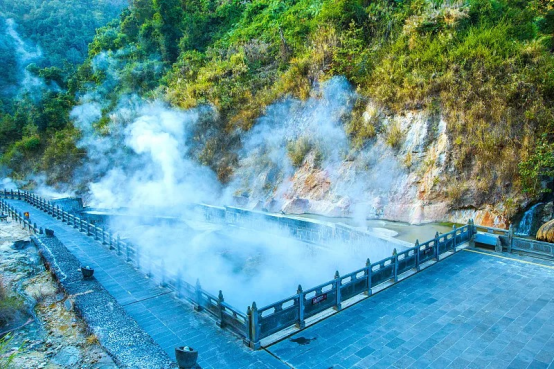
The scenic area is densely covered with abundant geothermal resources, including dozens of gushing hot springs and gas springs with varying temperatures and diverse forms. Landmarks such as the Big Boiling Pot, Conception Well, Pearl Spring and Toad Mouth feature unique scenery, with boiling water and steaming mist lingering all year round, creating a distinctive landscape of perpetual smoldering heat. The core attraction, the Big Boiling Pot, boasts extremely high water temperature with constantly boiling spring water, symbolizing the vigorous vitality of Tengchong’s geothermal resources. For thousands of years, local people have developed unique catering and health-preserving folk customs by taking advantage of geothermal energy, such as boiling eggs with hot springs and steaming food with geothermal heat. More than a superior natural geological wonder, Rehai Scenic Area embodies the ancient wisdom of local people adapting to and utilizing nature. Integrating geological popular science, folk culture and health preservation culture, it stands as a representative landmark of Tengchong’s landscapes and humanity.
3. Tengchong Volcanic Group Geopark
Scattered across the park are various complete volcanoes, craters and lava platforms with clear outlines. The three most representative volcanoes, Da Kongshan, Xiao Kongshan and Hei Kongshan, feature majestic mountain shapes. Standing atop the peaks, visitors can overlook the panoramic view of the volcanic landforms and Tengchong Basin. After thousands of years of wind and rain erosion and ecological evolution, the once desolate lava land has now been covered with lush vegetation, forming a unique ecological landscape of forests growing on volcanoes. For millennia, local residents have skillfully used volcanic stones to build houses, pave roads, construct bridges and make utensils, forming distinctive volcanic stone dwelling culture and construction techniques integrated into daily life. As a valuable geological research base, the volcanic group witnesses the evolution of Tengchong’s landforms and the survival and development history of local ancestors, representing a classic integration of natural wonders and folk humanity.
4. Western Yunnan Anti-Japanese War Memorial Hall & National Martyrs Cemetery
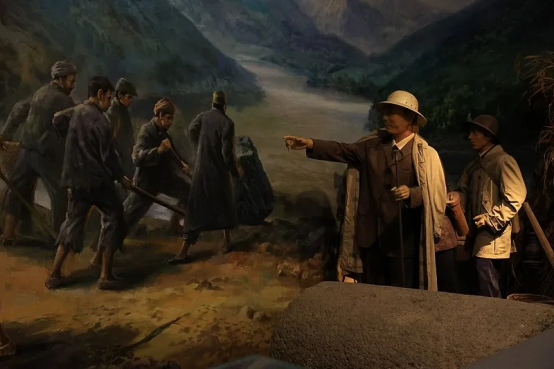
Completed in 1945, the National Martyrs Cemetery was built to bury and honor the heroic soldiers who sacrificed in the Western Yunnan Campaign. With solemn architecture and evergreen pines and cypresses, rows of orderly tombstones are engraved with the names and immortal feats of martyrs. The Western Yunnan Anti-Japanese War Memorial Hall collects a wealth of cultural relics, images and historical materials, fully restoring the arduous course of the war and the heroic deeds of border soldiers and civilians defending the homeland, and vividly interpreting the unyielding and patriotic spirit of the Western Yunnan War of Resistance. The campaign not only recovered the lost borderland of southwest China and opened up the China-India Highway, but also safeguarded national territorial sovereignty. As an important patriotic education base, it carries Tengchong’s profound national memories and inherits the indomitable anti-war spirit of the Chinese nation, serving as a core humanistic resort for remembering history, honoring martyrs and promoting patriotism.
5. Heshun Wetland in Tengchong
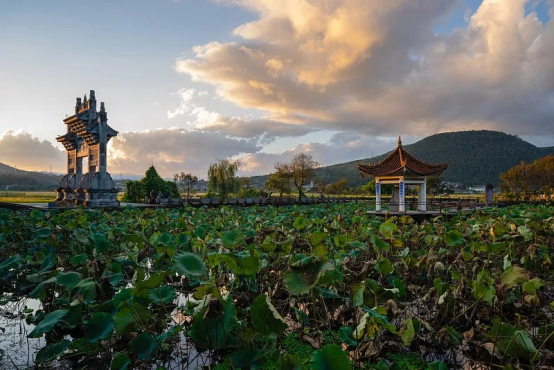
The wetland boasts well-preserved ecology, lush water plants and dancing water birds, with interlaced rivers and lakes and scattered farmlands. Blending perfectly with ancient towns, farmlands and mountains, it presents a poetic landscape of integrated mountains, waters, farmlands and ancient villages. Ancient bridges, roads and ferry relics along the waterfront record the vicissitudes of Silk Road caravans. For a long time, local Heshun ancestors lived and farmed by the water, developed agriculture and trade relying on the wetland water system, and fostered a simple and peaceful borderland farming culture as well as virtuous folk customs of respecting culture and kindness. Quiet and secluded from the hustle and bustle today, Heshun Wetland retains its original ecological scenery and carries the millennial farming context, Silk Road memories and worldly fireworks of the ancient town, making it a poetic paradise where Tengchong’s natural ecology and humanistic heritage blend perfectly.