
 English
 French
 Spanish
 Russian
 Arabic
 Italy
Italy
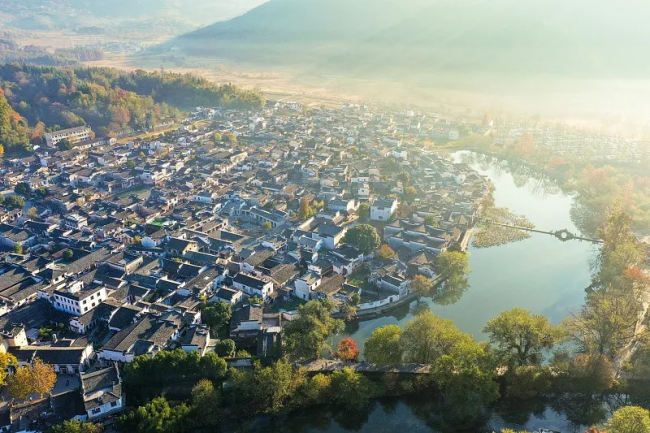
Huangshan
Anhui Province, China · Huangshan
“Stunning Peaks · Huizhou Charm · The Essence of Ink-Wash Jiangnan”
Contents
I. City Overview
II. Geography & Ecology
III. History
IV. Top Attractions
V. Cultural Heritage
VI. Ethnic Culture & Folk Customs
VII. Local Cuisine
VIII. Crafts & Specialties
IX. Getting There
X. Best Season & Itineraries
XI. Economy
I. City Overview
Huangshan City sits at the southernmost tip of Anhui, in the Wannan hills along the upper Xin'an River. It is the cradle and heartland of Huizhou culture and governs Tunxi, Huangshan, and Huizhou districts plus Shexian, Xiuning, Yixian, and Qimen counties—historically 'Huizhou.' Covering about 9,807 km² with a population around 1.33 million, it is home to Mount Huangshan, famed for its 'five wonders'—odd pines, grotesque rocks, sea of clouds, hot springs, and winter snow—inscribed as a UNESCO Mixed (Cultural and Natural) World Heritage site in 1990. The Huizhou villages of Xidi and Hongcun became World Cultural Heritage in 2000. A land of flourishing letters and merchant lineages, it is celebrated for Huizhou architecture, the 'three carvings,' the Xin'an school of painting, and Huizhou cuisine—a paragon of 'villages in Chinese paintings.'
Quick Facts
Location | S Anhui, upper Xin'an River |
Divisions | 3 districts, 4 counties |
Area | ~9,807 km² |
Population | ~1.33 million |
Ethnic groups | Han (Huizhou) |
Highest peak | Huangshan 1,864 m |
Climate | Humid subtropical |
II. Geography & Ecology
Huangshan lies in the transition zone between the Jiangnan and Zhemin hills, with overlapping peaks and crisscrossing valleys. Its granite peaks rise abruptly—the three main summits, Lotus, Bright Summit, and Celestial Capital, all exceed 1,800 m. The Xin'an River system originates in these mountains and winds east, painting the 'Huangshan–Xin'an' landscape. Around Shexian and Yixian, basins meet hills where Huizhou villages nestle by water with white walls and dark tiles. Forest coverage surpasses 80% with extremely high negative-ion levels—a true 'natural oxygen bar.'
III. History
The land of Huangshan belonged anciently to Shezhou and Huizhou; since the Qin set the counties of Yi and She, it has long been the political, economic, and cultural center of southern Anhui. In 1121 (Song dynasty) Shezhou was renamed Huizhou, and for nearly 800 years the 'one prefecture, six counties' pattern held. Huizhou merchants dominated the Ming–Qing era and prized learning—'in a village of ten households, schooling never ceases.' The Huizhou prefectural seat (today's Shexian) produced Zhu Xi, Dai Zhen, Hu Shi, and Tao Xingzhi. In 1987 the Huizhou prefecture was abolished and Huangshan City established, named for the mountain, opening a new chapter of 'tourism as the city's pillar.'
IV. Top Attractions
Welcome Pine
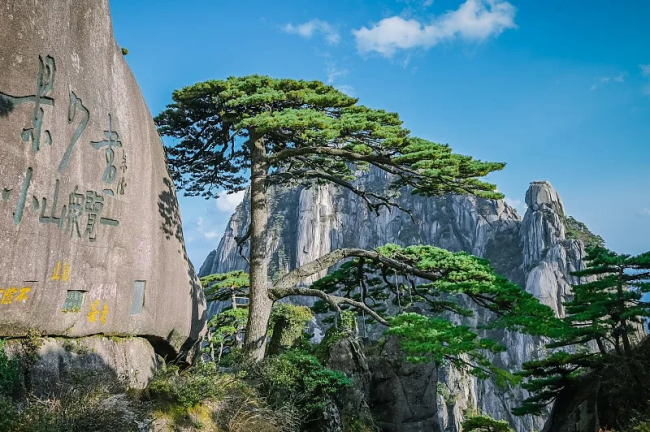
Welcome Pine
The Welcome Pine stands in a rock crevice above the Manjushri Cave east of the Jade Screen Tower, over a thousand years old, its single outstretched branch like an arm greeting guests—the iconic symbol of Huangshan and of Anhui. Clinging to the cliff and welcoming the world, it is listed in the World Natural Heritage and embodies Chinese hospitality. At dawn with mist swirling, the pine against the sea of clouds is a must-see for photographers and visitors alike.
Sea of Clouds
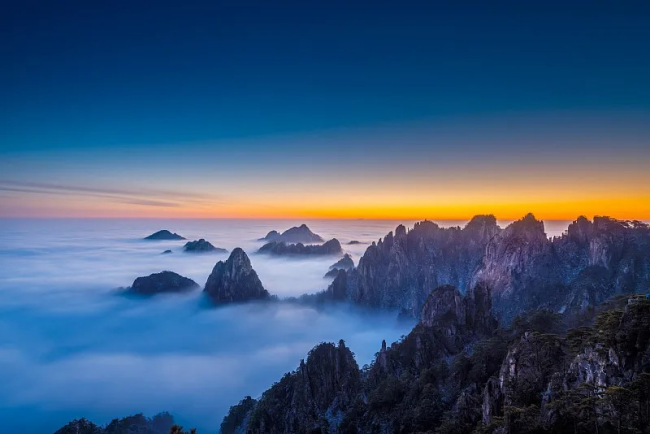
Sea of Clouds
The sea of clouds is one of Huangshan's 'five wonders.' After snow or rain clears and valley breezes stir, white cloud waves rise from a thousand gullies, flooding the peaks so that the thirty-six summits float like islands—a spectacular sight. Best viewed from Bright Summit, Beginning-to-Believe Peak, and Cloud-Dispelling Pavilion, the clouds are most vast in late winter and spring. Standing on a summit feels like the heavenly palace—the soul of Huangshan's fantastical landscape.
West Sea Canyon
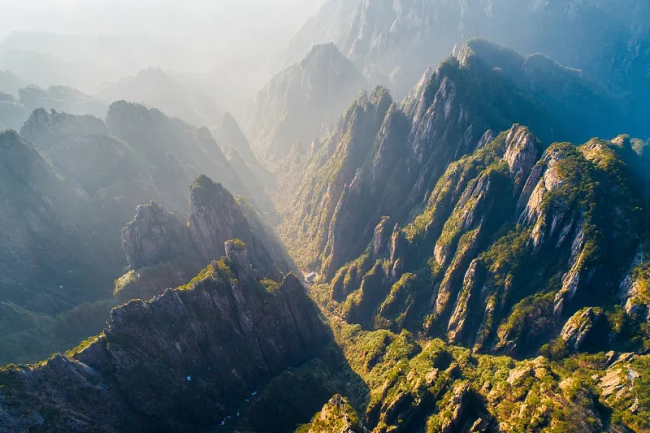
West Sea Canyon
The West Sea Canyon lies in the western scenic area—deep gorges and sword-like peaks make it Huangshan's most spectacular yet precipitous canyon, hailed as the 'Dream Valley.' Plank paths cling to cliffs and weave through clouds, overlooking rivaling peaks and interlaced pines and rocks. A rail-cable descent reveals its ever-changing perilous beauty, a deep dive into Huangshan's geology and grandeur.
Hongcun Village
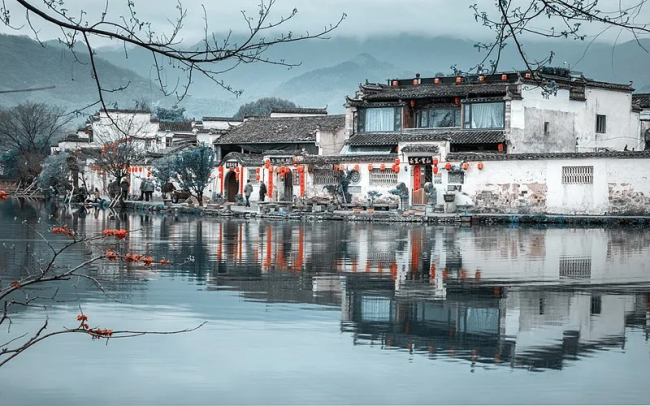
Hongcun Village
Hongcun in Yixian, founded in the Southern Song, is an outstanding example of Huizhou villages and, with Xidi, became World Cultural Heritage in 2000. Laid out in the shape of an ox—the Moon Pond and South Lake as its 'stomach,' water channels as its 'intestines'—it is 'a village in Chinese painting.' White walls, dark tiles, and stepping horse-head gables reflect in the water like a poem, a living museum of Huizhou dwelling and feng-shui wisdom.
Xidi Village
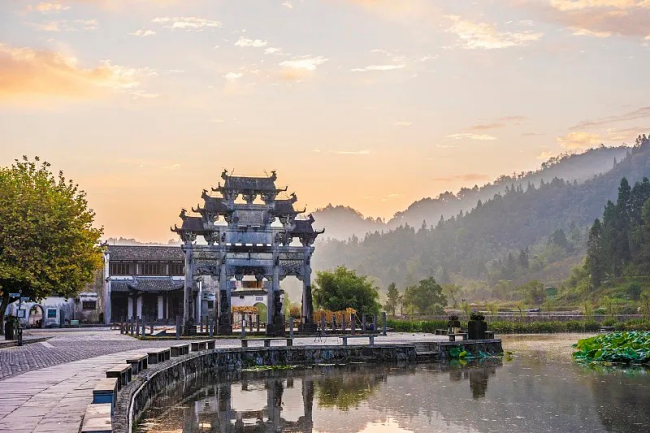
Xidi Village
Xidi in eastern Yixian, founded in the Northern Song, takes its name from the 'Western Post' once run by a Hu ancestor, and became World Cultural Heritage in 2000. Its Ming–Qing residences, ancestral halls, and memorial arches survive intact, with exquisite brick, wood, and stone carvings; halls like Lufu and Jing'ai show the Huizhou merchant's 'scholarly commerce.' Deep flagstone lanes and ancient rhythm make it a living fossil of Huizhou clan society.
Tunxi Old Street
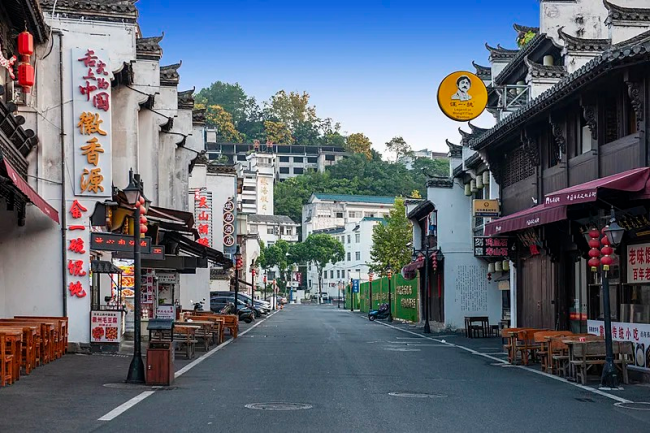
Tunxi Old Street
Tunxi Old Street lies in central Huangshan at the confluence of the Heng and Xin'an rivers—one of China's best-preserved Song–Ming commercial streets, 'a flowing Qingming Riverside Scroll.' Continuous Huizhou shops with white walls and dark tiles sell the Four Treasures of the Study, the three carvings, tea, and Huizhou food. At dusk lanterns light the flagstones—the best place to feel Huizhou street life and merchant legacy.
Ancient Huizhou City (Shexian)
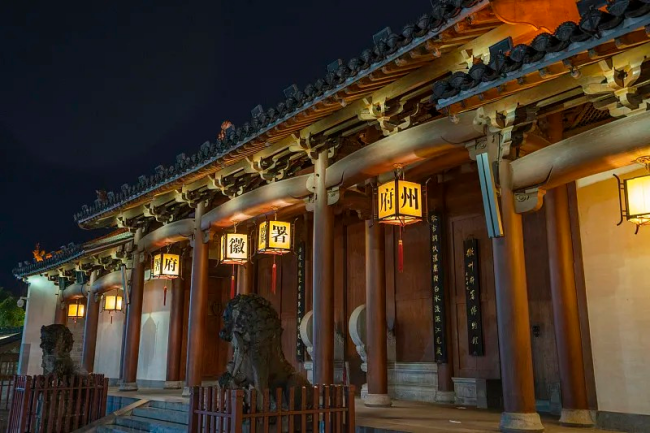
Ancient Huizhou City (Shexian)
The Ancient Huizhou City in Shexian is a well-preserved thousand-year prefectural seat, among China's four great ancient cities alongside Lijiang, Pingyao, and Langzhong. Within lie the Xu Guo Stone Arch (an octagonal memorial gate), Doushan Street, the prefectural yamen, and the Yuliang Dam—pinnacles of Huizhou architecture and arch art. Strolling the old city reveals the profound literary lineage and merchant legends of 'the Confucian southeast.'
V. Cultural Heritage
Huangshan's heritage is extraordinarily rich. Mount Huangshan was inscribed as a UNESCO Mixed World Heritage in 1990, and Xidi and Hongcun as World Cultural Heritage in 2000. Huizhou culture shines through its architecture, the Xin'an school of painting, Huiju opera, Huizhou cuisine, the three carvings (wood, brick, stone), and Huizhou ink and She inkstones. Huizhou dialect, documents, and clan-hall culture form a unique humanistic lineage; the merchant ethos of 'scholarly commerce and integrity' deeply shaped modern Chinese business civilization.
VI. Ethnic Culture & Folk Customs
Huangshan is overwhelmingly Han (the Huizhou subgroup), with honest folkways that prize learning. Wedding rites, temple fairs, and the 'stacked arhats' folk dance pass down generations; Huiju opera (with Qingyang tune) is a key source of Peking opera, and Huizhou folk songs and nuo dances are archaic and lively. At Spring Festival and Lantern Festival, dragon lanterns, flower lanterns, and opera fill the white-walled lanes with local flavor and nostalgia.
VII. Local Cuisine
Dish | Description |
Huizhou Stinky Mandarinfish | The signature Huizhou dish—mandarinfish gently fermented for a faint 'aromatic' pungency, tender and savory with chili, exemplifying Huizhou cuisine's masterful mountain-game cooking. |
Hairy Tofu (Maodoufu) | Tofu cultured until white filaments grow, then pan-fried crisp outside and tender within, served with chili sauce—a classic Huizhou street snack said to have won Zhu Yuanzhang's praise. |
Hu Shi's One-Pot | A Jixi specialty layering meatballs, egg dumplings, dried bamboo, and tofu, simmered gently—Hu Shi's favorite for guests, symbolizing reunion and abundance. |
Dried Bamboo Shoots | Spring shoots from southern Anhui, blanched and dried—crisp, fragrant, perfect with pork or chicken, a year-round taste of the hills. |
Huangshan Maofeng Tea | One of China's ten famous teas, grown in misty Huangshan gardens; sparrow-tongue shaped, clear jade liquor, sweet and mellow—ideal for hospitality and gifting. |
VIII. Crafts & Specialties
Huizhou crafts reached unsurpassed heights. Huizhou ink and She inkstones are the 'twin wonders of the scholar's studio,' with Li Tinggui ink and Longwei inkstone lasting a millennium; the three carvings (wood, brick, stone) adorn doorways, beams, and arches with intricate beauty; Huizhou lacquerware, the Wan'an compass, and bamboo weaving each show fine craft. Today Huizhou carving and ink-making are national intangible heritage—treasures of living Huizhou culture.
IX. Getting There
Transport: Huangshan Tunxi International Airport links major Chinese cities; the Hefei–Fuzhou and Hangzhou–Huangshan high-speed lines meet at Huangshan North, about 2–3 hours from Hefei, Hangzhou, and Shanghai; the Jingtai and Huangfu expressways cross the prefecture. Scenic shuttles connect the mountain and villages, and several new cableways ease the ascent. Book tickets and lodging ahead in peak season.
X. Best Season & Itineraries
Best time to visit: All four seasons please: spring (Mar–May) brings blossoms and green Xin'an; summer (Jun–Aug) is cool—a retreat; autumn (Sep–Nov) offers crisp air and tinted forests, best for village photography; winter (Dec–Feb) caps pines with snow, uniting sea of clouds and winter snow into a fairyland.
Recommended itineraries:
· Classic Mountain 2-Day: Huangshan Scenic Area (Jade Screen–Bright Summit–West Sea Canyon) — Tangkou hot springs.
· Huizhou Villages 2-Day: Hongcun — Xidi — Ancient Huizhou City (Shexian) — Tunxi Old Street.
· Landscape & Culture 3-Day: Huangshan sea of clouds — Xin'an River gallery — Huizhou Culture Museum — Chengkan village.
XI. Economy
Huangshan is Anhui's tourism leader, with 'tourism as the city pillar' paying off. Mountain-and-village tourism draws tens of millions yearly; Huizhou tea, cuisine, cultural creative goods, and B&Bs thrive. Under an ecology-first strategy, forest wellness, study tours, and rural tourism are rising—shifting from 'spot tourism' toward a high-quality, all-region model as a Huizhou cultural-ecology reserve.